$60–80
Production cost per ton (Bioenergy Europe)
$100–150
Biomass pellet selling price per ton (global avg)
2–4 yrs
Typical ROI payback on wood pellet plant
6.6%
Biomass pellet market CAGR to 2032
90–150
kWh energy needed per ton of pellets produced
Choosing the wrong biomass pellet mill is an expensive mistake that takes years to recover from. Underpower a plant and you leave revenue on the table. Overspend on a machine your feedstock doesn’t need and you’ve burned your margin before a single ton ships. The real question every buyer should be asking isn’t “which brand is most famous?” — it’s “which machine gives me the best cost per ton, the most reliable uptime, and the fastest payback on my specific feedstock?” This guide is built around that question.
Section 1: Why This Is the Most Important Equipment Decision You’ll Make
The global biomass pellets market was valued at $13.35 billion in 2024 and is projected to grow to $22.11 billion by 2032 at a CAGR of 6.6% (Fortune Business Insights, 2025). Europe alone produced 20 million tonnes of biomass wood pellets in 2023, representing 36% of global production. The United States produced 12 million tonnes the same year, with approximately 70% exported to Europe and Asia.
For investors and operators, the financial case is compelling: production cost for biomass pellets typically runs $60–$80 per ton (Bioenergy Europe), while the global average selling price ranges from $100–$150 per ton. That spread — up to $90 per ton on a well-run operation — means a 10 t/h plant running 6,000 hours per year could generate over $5.4 million in gross annual margin before fixed costs. But only if the mill runs reliably, efficiently, and at spec.
ROI SNAPSHOT: What a Well-Chosen Biomass Pellet Mill Actually Returns
Investment (20k t/yr turnkey)
$500K–$1.5M
Profit margin per ton
$20–90/ton
Equipment service life
10+ years
ROI payback period
2–6 years
Max ROI (wood pellet business)
Up to 20%
Sources: RICHI Machinery project cost analysis; GEMCO wood pellet plant guide; Bioenergy Europe production cost report. A turnkey 20,000–50,000 t/yr production line typically requires $500,000–$1.5 million total capital. Higher-capacity, heavy-duty pellet mills deliver a lower cost per ton over time due to superior energy efficiency, higher output, and reduced downtime.
Section 2: The 5 Questions Every Biomass Buyer Must Answer First
Before evaluating any brand, experienced operators work through five non-negotiable questions. Get these wrong and even the best machine on paper will underperform.
Q1 · FEEDSTOCK
What are you pelletizing?
Softwood sawdust, rice husk, straw, palm EFB, and miscanthus each require different die compression ratios, moisture targets (12–18%), and particle sizes (<5mm). A mill optimized for pine may choke on palm fiber. Confirm feedstock compatibility before anything else.
Q2 · CAPACITY
What throughput do you actually need?
Size your plant for 110–120% of your current demand — not your 5-year aspiration. Oversized capital kills payback periods. A complete production line costs roughly $68,000+ per t/h capacity. At 5 t/h, that’s ~$340K before site costs.
Q3 · ENERGY COST
What’s your local electricity tariff?
Energy consumption runs 90–150 kWh per ton of finished pellets. At $0.10/kWh that’s $9–15 in electricity alone per ton — 10–20% of your total production cost. In high-tariff markets (EU, Japan), machine energy efficiency can swing your P&L by millions annually.
Q4 · UPTIME
What does one hour of downtime cost you?
At $125/ton average price and 5 t/h output, one unplanned shutdown hour costs $625 in lost revenue — before maintenance labor. A machine with 95% vs 98% uptime across 6,000 annual operating hours represents 180 lost hours: over $112,000/year difference on a single line.
Q5 · SERVICE
Where is the nearest service hub?
Die and roller replacement — the highest-frequency maintenance item — costs $150–$900 per set. Waiting 2 weeks for a part from overseas costs more than the part. Brands with local warehousing and service hubs within your region reduce this risk dramatically.
Section 3: The Best Pellet Mill Brands for Biomass — Evaluated Honestly
Ranked not by fame, but by what matters most to buyers: cost per ton, feedstock flexibility, uptime reliability, and total cost of ownership.
01
Best Value-to-Output Ratio · Founded 1995 · Zhengzhou, Henan, China
$10K–$90K
Single machine price range
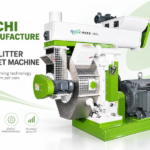
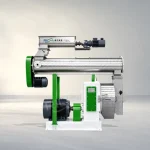
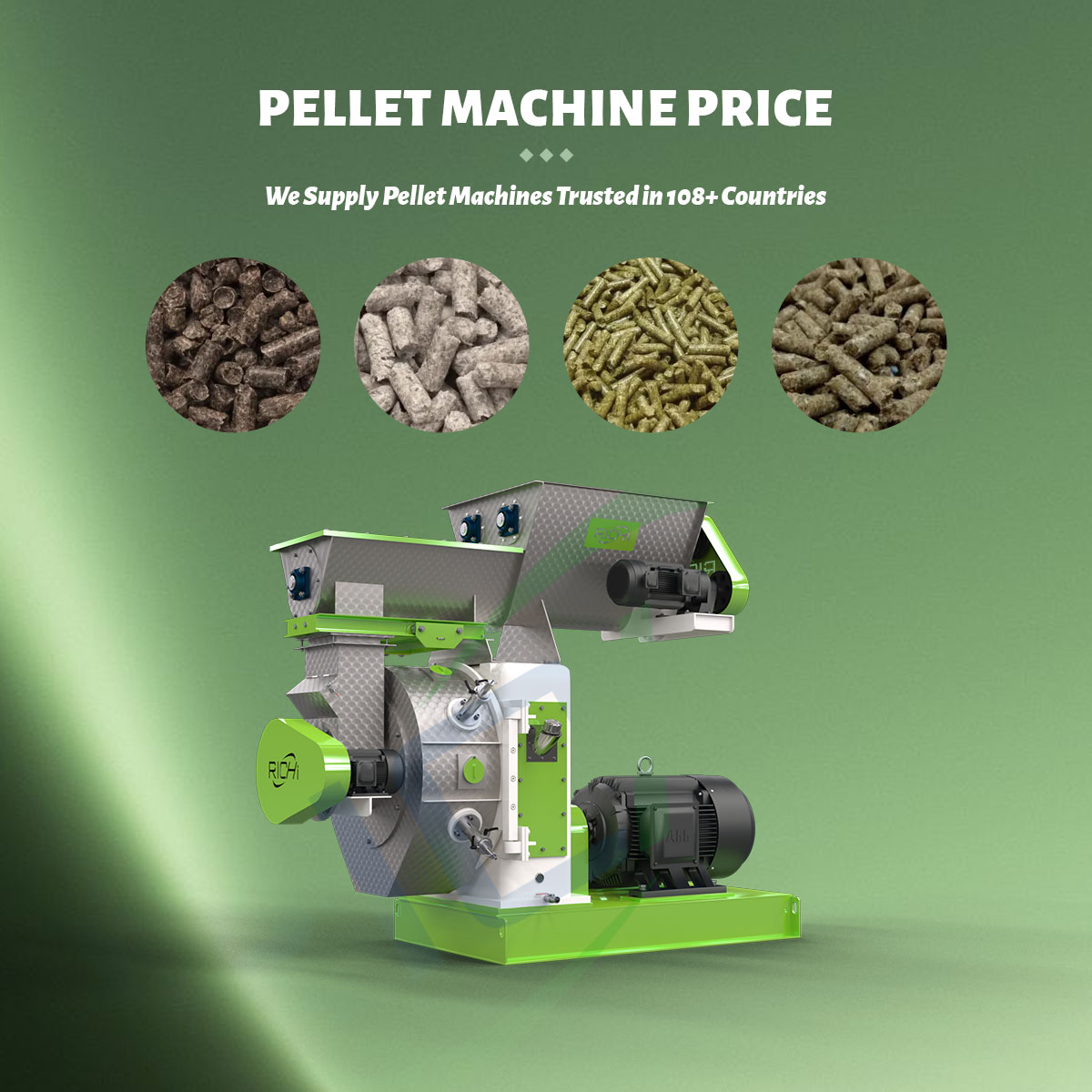
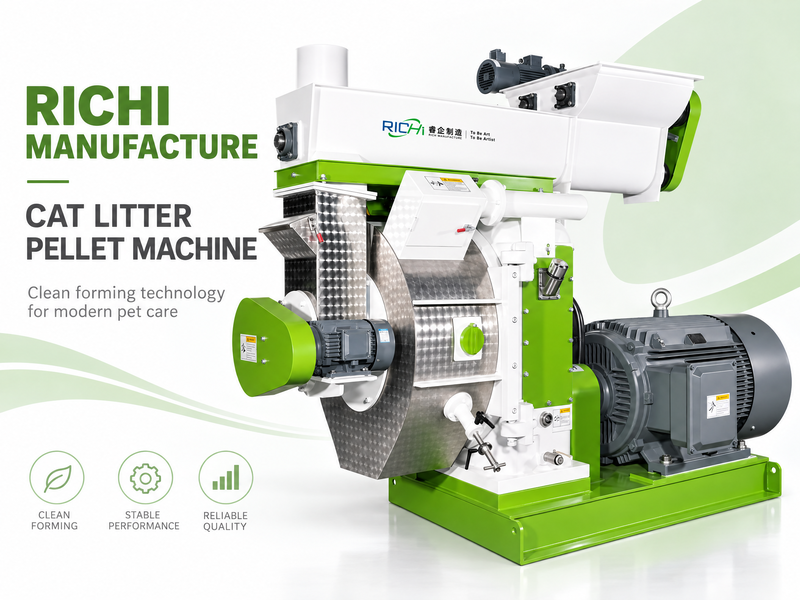
Who it’s for: Operators in Asia-Pacific, Middle East, Africa, Latin America, and Europe building new biomass pellet lines from 0.5 t/h to 40 t/h who need verified throughput, multi-feedstock flexibility, and full international certification at 30–50% below Western brand pricing.
Machine Price Range$10,000–$90,000 (FOB single unit)
Capacity Range0.5–40 t/h (MZLH series)
Max Motor Power280 kW (MZLH858)
Output Boost (difficult materials)+25% vs. conventional via shaft-end ventilation
Feedstocks HandledWood, straw, rice husk, EFB, bamboo, miscanthus, hemp
CertificationsISO9001, CE, BV, SGS, TÜV, RTN, CU-TR
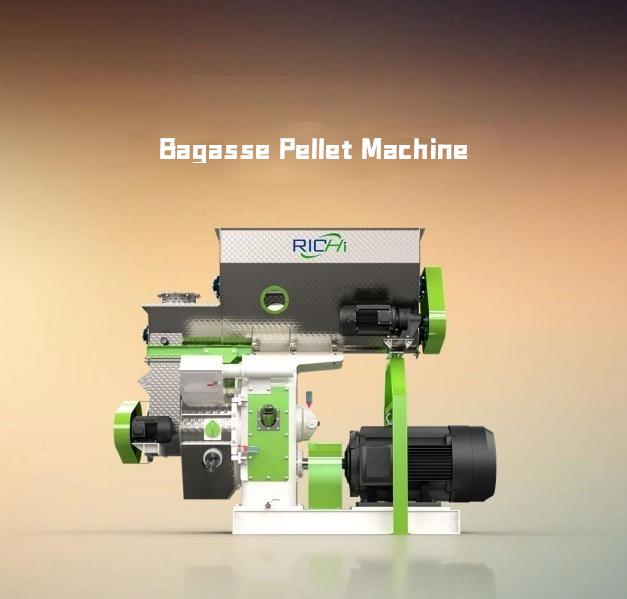
The cost-per-ton advantage. RICHI’s patented ventilating-from-shaft-end system increases output on low-adhesive, difficult materials — rice husks, sunflower husks, palm shells — by more than 25% versus conventional ring-die designs. This directly lowers your cost per ton on precisely the feedstocks that typically squeeze margins hardest. For a 5 t/h line producing 30,000 t/yr, that 25% output gain compounds into 7,500 additional tonnes of annual production on the same energy and labor spend.
Verified project references (biomass, confirmed):
🇵🇱 Poland, 2 t/h: Straw & wood chips → heating pellets. Customer reported excellent durability and low fines.
🇧🇷 Brazil, 10–12 t/h: Waste wood & straw → dual biomass fuel + animal feed output.
🇮🇩 Indonesia, 4 t/h: Rice husk & acacia wood chips (25–30% moisture) → export-grade biomass.
🇺🇸 USA, 10–12 t/h: Hemp pellets for heating & industrial applications.
🇩🇪 Germany, active: Wheat straw & sunflower hulls → domestic heating market pellets.
🇸🇦 Saudi Arabia, active: Agricultural waste → industrial boiler biomass fuel.
RICHI’s MZLH808 (FOB $60,000–$100,000) uses imported Swedish and Japanese bearings, an alloy-steel ring die, and a high-efficiency imported gearbox — components at parity with Western OEMs but at a capital cost 30–50% lower. The company has installed tens of thousands of biomass pellet production lines across 140+ countries, covering palm oil mills, sugar mills, plantation owners, agricultural cooperatives, grain processors, and timber companies. Every project type listed on their site includes the raw material, client type, moisture content, and use-case — a level of transparency rare in the industry.
Honest buyer’s note: For buyers in North America or Northern Europe who need a local service network with engineers on-call within hours, RICHI’s service response time may lag behind CPM or ANDRITZ’s regional hubs. Factor in local spare-parts logistics before committing at the highest capacity levels.
02
CPM (California Pellet Mill)
Lowest Energy Cost Per Ton · Founded 1883 · Waterloo, Iowa, USA
240,000
kWh saved per mill/year (Twin Track)
Who it’s for: Large-scale North American and European biomass producers who run 24/7 operations and where energy efficiency is the primary lever on margin — particularly softwood, hardwood, and agricultural residue feedstocks. Premium capital cost justified by long-term operating savings.
Latest Biomass ModelPM1200DD (Direct Drive, LIGNA 2025)
Twin Track Energy Saving~240,000 kWh/year per mill
Die Hole Count IncreaseUp to 43% vs. conventional dies
7900 / PM9950 Output>10 t/h on softwood
Industry Market Share~17% global pellet machine market
Independent ValidationFutureMetrics Oct 2024 field evaluation — recommended
The energy-savings case. At $0.10/kWh, CPM’s Twin Track technology saves approximately $24,000 per mill per year in electricity alone. Over a 10-year machine life, that’s $240,000 in pure energy savings — enough to offset a significant portion of the premium price difference between CPM and budget alternatives. For operations in markets where electricity costs $0.15–0.20/kWh (UK, Germany, Japan), the saving scales proportionally higher.
The PM1200DD (unveiled at LIGNA 2025) eliminates the gearbox and V-belt entirely — replacing them with a direct motor-to-shaft connection. This is significant for two reasons: (1) fewer mechanical components means fewer failure points, which translates directly to uptime; and (2) an independent study published in Biofuels International (authored by CPM’s Global Biomass Director and referencing a third-party energy audit) confirmed measurable energy and maintenance benefits. FutureMetrics — the most respected independent consultancy in the wood pellet sector — evaluated the direct drive mill at a customer facility in October 2024 and formally recommended it.
Honest buyer’s note: CPM is not for beginners or small-scale operators. The premium machine pricing represents a significant capital commitment that only delivers its full return at scale. Smaller operations and emerging-market buyers will find RICHI or ANDRITZ’s entry-level lines more appropriate for their capital structure.
03
ANDRITZ Feed & Biofuel
Best for Minimum Cost Per Ton at Scale · Founded 1852 · Graz, Austria
2,500+
Paladin machines sold & operating worldwide
Who it’s for: Industrial-scale biomass producers who need a proven design with the lowest cost per ton over years of continuous operation, and who value a complete plant solution with digital monitoring and 98% guaranteed uptime over the lowest purchase price.
Flagship Biomass Models26LM, 32LM, BioMax, PM30-6, Paladin
26LM Design ClaimIndustry’s lowest operating costs for biomass
Guaranteed Uptime (PM30-6)98%
Density Improvement60 kg/m³ → 650 kg/m³ (transport cost savings)
Energy SavingsUp to 15% vs. conventional biomass systems
Reference Plants350+ biomass plant references worldwide
The uptime-to-margin calculation. ANDRITZ explicitly designs the 26LM to provide “higher performance at the industry’s lowest operating costs” for biomass. The 32LM offers a dual-reduction drive for maximum durability under the harshest feedstock conditions. Its Paladin series — with more than 2,500 machines sold and operating worldwide — is the most commercially validated biomass pellet mill design in history. The densification leap from 60 kg/m³ to 650 kg/m³ that ANDRITZ achieves also cuts transport and storage costs meaningfully — a margin lever buyers often overlook.
ANDRITZ’s digital dashboards and automation systems provide real-time monitoring, predictive maintenance, and consistent product quality. For large operations burning through dies and rollers at scale, predictive maintenance alone can reduce unplanned downtime by an estimated 20–30% — translating to hundreds of thousands in preserved annual revenue. The company backs its biomass portfolio with over 350 reference biomass plants worldwide and service hubs in 25+ countries.
Honest buyer’s note: ANDRITZ is an outstanding long-term industrial partner, but its strength is in large-capacity turnkey installations, not modular or incremental build-outs. Buyers entering the biomass market at small or medium scale will find ANDRITZ’s offering over-engineered for their immediate needs and priced accordingly.
04
Bühler Group (Biomass Line)
Best for Smart Biomass Integration · Founded 1860 · Uzwil, Switzerland
10%
Energy saving vs. belt drive (RWPR / Kubex)
Who it’s for: Biomass operators who also process feed, or who need intelligent automation, recipe management, and full traceability across multiple product types — and who are willing to pay premium pricing for Bühler’s global service network and data-driven operations platform.
Biomass ModelRWPR-900 (6 t/h industrial biomass)
Feedstock RangeFinely ground wood, straw, sunflower hulls, biomass particles
Drive EfficiencyUp to 10% energy saving (direct drive options)
Smart PlatformPelletingPro, real-time monitoring, auto adjustments
Service Network140+ countries; 2023 acquired APM (North America)
Group Revenue$3.3B+ (funds largest R&D in segment)
Bühler’s biomass RWPR series is not the company’s highest-output biomass machine, but it is arguably the most intelligently integrated — with Bühler’s PelletingPro digital system enabling remote monitoring, automated recipe adjustment, and predictive maintenance from a single dashboard. For large feed + biomass hybrid facilities, Bühler’s ability to manage both production streams in a unified control environment is a genuine operational advantage. Their 2023 acquisition of American Pellet Mill Services (APM) also materially strengthened North American on-site service responsiveness.
Buyer’s Decision Matrix: Which Brand Wins for Your Situation?
| Buyer Situation |
Best Brand |
Why |
| New entrant, <5 t/h, rice husk / ag waste feedstock |
RICHI |
Lowest entry cost ($10K–35K), all certifications, proven on difficult feedstocks, full turnkey support |
| Mid-scale 5–20 t/h, mixed biomass, Asia/Africa/LatAm |
RICHI |
Best value at this scale; MZLH568–768 range; 140-country support network; 30–50% cheaper than Western OEMs |
| Large-scale >10 t/h, softwood/hardwood, energy efficiency priority |
CPM |
240,000 kWh/yr savings, 17% global share, PM1200DD Direct Drive, FutureMetrics endorsed |
| Industrial plant, 98% uptime required, turnkey preferred |
ANDRITZ |
Guaranteed 98% uptime, 2,500+ Paladin installs, lowest cost-per-ton design (26LM), 350+ reference plants |
| Biomass + feed hybrid facility, smart automation needed |
Bühler |
PelletingPro unified control, RWPR + Kubex cover both streams, strongest R&D, 140-country service |
| EU/North America, demanding ag residues (straw, EFB, palm) |
RICHI / ANDRITZ |
RICHI patented shaft-end ventilation for difficult materials; ANDRITZ 32LM rugged design for challenging conditions |
Section 4: The Biomass Market Through 2032 — What Buyers Need to Know Now
The investment case for biomass pellet production has never been more structurally supported. The global biomass pellets market is projected to grow from $14.14 billion in 2025 to $22.11 billion by 2032 (6.6% CAGR, Fortune Business Insights). Three major institutional demand signals should inform every buyer’s equipment decision today:
INDIA — Demand Signal
NTPC, India’s largest power company, ordered 930,000 tonnes of biomass pellets for co-firing in January 2025, and is procuring a further 2.5 million tonnes. India’s biomass demand is projected to exceed 10 million tonnes by 2030. This represents one of the fastest-growing single-country demand signals globally — directly benefiting producers with Asian-market-ready equipment and certifications.
NORTH AMERICA — Investment Signal
In September 2024, Canadian renewable fuel company Woodland Biofuels announced a $1.35 billion investment at the Port of South Louisiana for waste-biomass-to-biofuel production. SDL Solutions announced plans to double its wood pellet production line capacity the same month. These are not projections — they are capital commitments already in motion.
EUROPE — Policy Signal
Europe produced 20 million tonnes of biomass pellets in 2023. Germany alone accounts for 3 million tonnes, with the majority EN Plus-certified A1-grade. The EU’s European Green Deal targets climate neutrality by 2050, with bioenergy a mandated component. Regulatory pull in Europe makes it the world’s most stable long-term biomass pellet market — with Germany, Sweden, and Latvia as the primary supply hubs.
TECHNOLOGY OUTLOOK: What’s Coming to Biomass Pellet Mills by 2030
Torrefied pellets: Higher energy density, lower moisture, more hydrophobic — creating a stable commodity comparable to coal for power plant co-firing. Mills that can process torrefied feedstocks will command premium pricing.
Direct Drive universality: CPM’s PM1200DD points toward an industry shift away from gearbox-and-belt drives. Lower mechanical complexity = lower maintenance cost = higher uptime for all major manufacturers.
AI-assisted recipe management: Bühler’s PelletingPro platform previews where the industry is heading — real-time feedstock moisture sensing + automated die-gap adjustment + predictive die-wear alerts. Expect all Tier 1 brands to offer this by 2028.
The Verdict: Who Makes the Best Biomass Pellet Mill?
There is no single “best” — there is only the best for your feedstock, your scale, your geography, and your margin model. RICHI Machinery offers the best cost-to-output ratio for operators in emerging markets and difficult-feedstock applications (0.5–40 t/h, $10K–$90K). CPM delivers the lowest lifetime energy cost for large-scale softwood and hardwood operations in North America and Europe. ANDRITZ provides the highest guaranteed uptime (98%) and lowest cost-per-ton for industrial-scale continuous biomass production. Bühler wins for hybrid feed-biomass operations requiring intelligent automation. The biomass pellet market will grow to $22.11 billion by 2032. The best time to get the equipment decision right is before your competitors do.
Sources & References
Fortune Business Insights: Biomass Pellets Market Size, Share & Growth Report 2025–2032 (published 2025) · Bioenergy Europe: Biomass pellet production cost report ($60–$80/ton) · RICHI Machinery: richipelletmachine.com biomass pellet project cost guide; richipelletmill.com biomass pellet mill product page (Dec 2025) · CPM: PM1200DD launch at LIGNA (May 2025); Twin Track technology brief; Biofuels International article “The Hidden Cost of Complexity” (Brock Harrington); FutureMetrics field evaluation (Oct 2024) · ANDRITZ: Biomass pelleting product pages (26LM, 32LM, Paladin, PM30-6); Biomass pelleting industry overview · Bühler Group: RWPR-900 product page, PelletingPro system overview; APM acquisition announcement (2023) · GEMCO: Wood pellet plant setup guide (ROI up to 20%, payback 2–4 years) · FABON: ROI of biomass pellet plant 2025 report · Pakistan Commercial Bank: Biomass pelletizing plant payback period analysis (5–6 years) · Fortune Business Insights: Biomass Pellets Market — India NTPC 930,000 tonne order (Jan 2025); SDL Solutions capacity expansion (Aug 2024); Woodland Biofuels $1.35B investment (Sep 2024) · Straits Research: Biomass pellets making machine market $9.6B (2024) → $16.27B (2033) · IEA: Biomass market demand growth forecast 6–8% annually over next five years