
Silage is not simply dry forage in a different form. Its moisture, fermentation history, fibre structure and storage condition can make it behave very differently from conventional dry feed ingredients. A silage feed pellet machine project must therefore begin with a clear definition of the material that will enter the process and the product that the farm or feed business intends to make. Selecting a pellet mill before establishing these conditions can lead to unstable feeding, poor pellet formation or a process that needs more drying and preparation than the project budget allows.
The practical objective is to build a controlled route from silage receiving to a stable, packable pellet. That route may include separation, chopping, drying, grinding, mixing, conditioning, pelleting, cooling and screening. Not every project needs every stage, but every stage that is required must be sized and integrated around the actual silage condition.
Characterize silage before choosing the machine
Collect samples from more than one point in the stored material. Record moisture, fibre length, visible contamination, density and any variation between batches. If the silage contains a high proportion of long stems, it may need chopping or size reduction before it can be metered reliably. If it is very wet, the project must address the water load before conventional dry pelleting can be considered. If it is already partially dried or mixed with dry ingredients, the process may be different.
Fermentation condition also matters. Material that has heated, spoiled or developed an undesirable odour should not automatically be treated as suitable feedstock. The feed business must establish the intended animal application and the quality requirements for the finished feed. A machine can change physical form, but it cannot correct poor raw-material quality or make an unsuitable ingredient nutritionally appropriate.
Decide whether drying is part of the project
Moisture is often the main process boundary for silage pelletizing. Wet material can be difficult to grind and feed consistently, and it may not form stable pellets in a conventional pellet mill. Drying may be necessary, but it adds heat demand, equipment, footprint, exhaust handling and operating cost. The correct decision depends on incoming moisture, target throughput, available fuel, local energy prices and the moisture range acceptable to the downstream process.
Calculate the water that must be removed rather than selecting a dryer from the wet feed rate alone. For a simple mass-balance estimate, if one tonne of incoming material contains 60% moisture on a wet basis, it contains 400 kg of dry solids and 600 kg of water. If the target is 15% moisture, the final mass would be approximately 471 kg, assuming no dry-solids loss. About 529 kg of water must be removed. This is an illustrative calculation; actual design must account for sampling, solids loss, heat recovery and the operating characteristics of the selected dryer.
Where drying is not practical, consider whether the material can be blended with dry ingredients or whether a different product route is more appropriate. Blending changes formulation and cannot be treated as a simple moisture adjustment without checking nutrient balance and feed safety. The recommendation should change when the incoming moisture, available heat source or intended feed specification changes.
Record the condition of the material at each major process boundary: receiving, after drying if installed, after grinding and at the pellet mill inlet. This helps identify where moisture or particle-size variation enters the system. During a trial, keep the sampling method consistent and note any manual adjustment to feed rate, steam or recycle. A reported hourly output without these operating notes is difficult to compare with another supplier’s result.
Prepare a consistent particle size and feed mixture
After moisture conditioning, size reduction should create a feed that can be conveyed and metered without excessive bridging. Long fibres may wrap around rotating parts or cause inconsistent flow. Excessively fine grinding can increase energy use and dust, so the target particle size should reflect the formulation and required pellet quality. Sampling after grinding helps confirm whether the equipment is producing the intended material distribution.
If silage is combined with grains, protein meals, minerals or other ingredients, batching and mixing become important. The mixer must accommodate the batch size and number of batches per hour required by the pellet mill. Ingredient addition order, liquid addition and mixing time should be established through formulation and process trials. A mixer that is too small can starve the pellet mill; one that is too large may operate inefficiently if the production schedule cannot fill it.
Match the pellet mill to the material and product
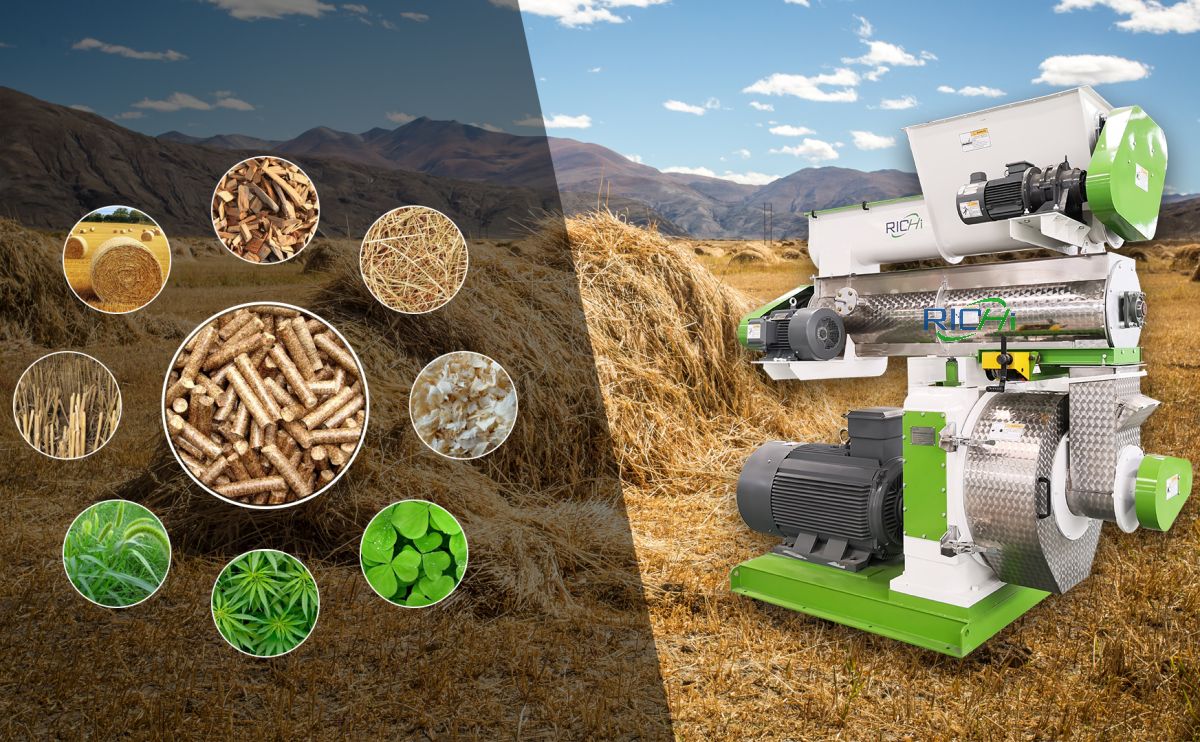
Pellet mill selection should consider required capacity, pellet diameter, formulation, moisture, particle size, die specification and operating hours. A machine’s nominal output is not a guarantee for every forage blend. Fibrous materials can create different compression and feeding behaviour from grain-based formulas. Ask the supplier to state the material conditions used for its capacity estimate and whether a test with representative silage is required.
The die and roller arrangement should be suitable for the product and material. Buyers should ask about die hole diameter, effective working area, compression ratio, roller adjustment and the maintenance method. These details affect the ability to make the required pellet and the time needed for inspection or replacement. Avoid selecting a model based only on motor power or the largest capacity printed in a catalogue.
Design cooling, screening and storage around product stability
Fresh pellets leave the mill warm and may retain moisture. Cooling helps bring the product closer to ambient conditions and supports handling and storage. The cooler must be matched to the pellet mill’s discharge and the expected pellet characteristics. Screening separates fines and oversized material. If fines are recycled, the return point and allowable recycle rate should be considered in the process design.
Storage conditions matter because pellets can absorb moisture or degrade if exposed to unsuitable environments. Confirm the required product temperature and moisture before packing. Choose bags, bulk storage or another handling method based on customer requirements and transport distance. Where the product will be stored for an extended period, validate stability under the expected storage conditions rather than assuming that a pellet remains unchanged after cooling.
Site and utility checks before installation
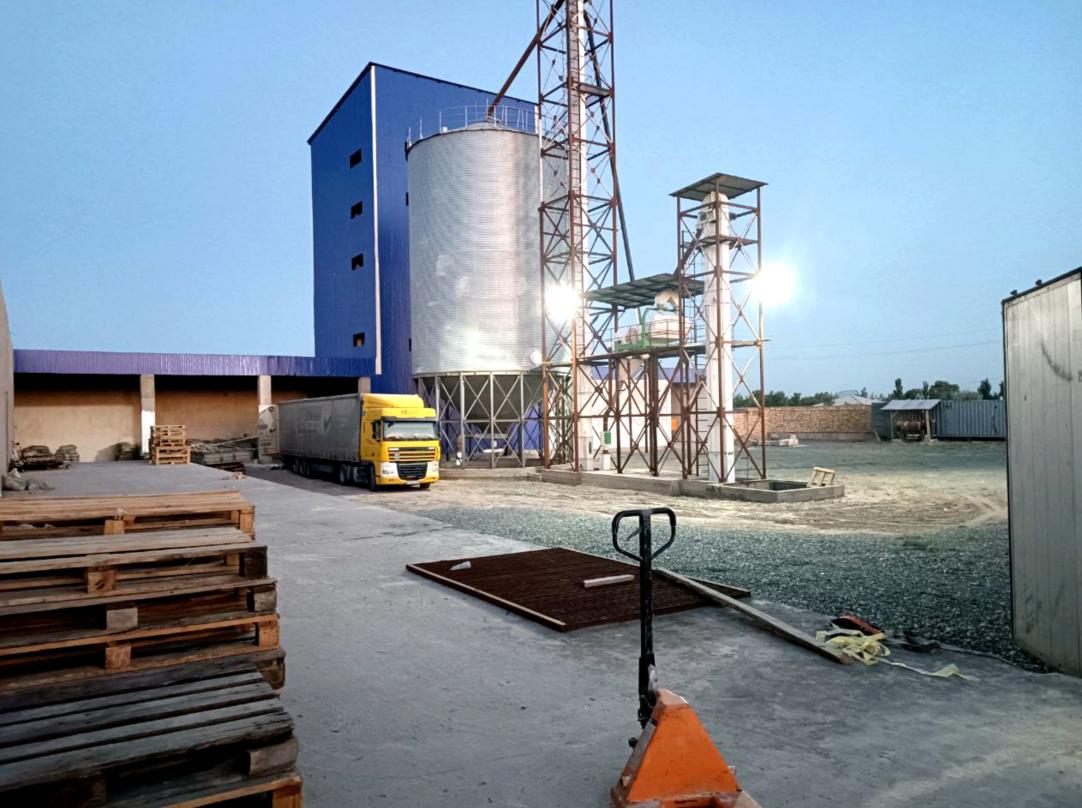
Prepare a site layout that shows wet-material receiving, any drying area, grinding, mixing, pelleting, cooling, screening, packing and finished-product storage. Allow separate routes for wet and dry material where cross-contamination or spillage is a concern. Confirm floor loading, foundation levels, access for delivery vehicles, maintenance clearances and lifting routes. If a dryer is included, reserve space for its heat source, exhaust, dust collection and fuel handling.
Check electrical capacity for all motors, not only the pellet mill. The grinder, conveyors, mixer, fans, dryer auxiliaries, cooler and packing equipment contribute to the total load. Confirm voltage, frequency, protection, grounding and control-panel location. If steam or thermal energy is needed, define the source, operating cost, water treatment, fuel storage and safety provisions before civil work is completed.
Silage project decision matrix
| Observed condition | Likely process response | Information to verify |
|---|---|---|
| High and variable moisture | Evaluate drying or controlled blending before pelleting | Moisture range, water-removal duty and heat-source cost |
| Long fibrous particles | Add or adjust chopping and grinding | Fibre length, screen size and feed consistency |
| Multiple ingredients | Coordinate batching and mixing with pellet mill demand | Formula, batch size and mixing uniformity |
| Different pellet diameters | Check die changes and production scheduling | Product specifications and changeover time |
| Long storage period | Strengthen cooling, moisture checks and packaging design | Storage environment and product acceptance criteria |
Commission with representative silage
Before the trial, inspect mechanical alignment, fasteners, lubrication, guards, emergency stops, motor rotation and instrument calibration. Run the equipment according to the supplier’s no-load procedure. During material trials, use silage representative of the expected supply, not an unusually dry or carefully selected batch. Record incoming moisture, particle size, feed rate, motor current, pellet dimensions, fines, product temperature and interruptions.
Acceptance criteria should identify the conditions under which the target output is expected. If the feedstock is wetter than the agreed basis, or if the drying system is not available, the trial does not represent the specified process. Likewise, a short run cannot demonstrate stable production if the equipment has not reached a steady operating condition. Record any adjustment and repeat the measurement after the process stabilizes.
What should be included in the supplier’s proposal?
Request a process flow diagram, equipment list, capacity basis, motor schedule, utility estimates, layout, foundation loads, wear-part recommendations and installation scope. Clarify whether the supplier includes chopping, drying, grinding, mixing, conditioning, cooling, screening, dust collection and packing. Identify who supplies the boiler or heat source, steel structure, cables, foundations and local installation labour.
For a project review, provide the supplier with silage samples, moisture test results, intended animal application, target capacity, pellet size, operating hours and site drawings. Review the silage feed pellet machine arrangement against those conditions. A complete proposal should explain the limitations of the material, the preparation stages required and the criteria that will be used to verify the finished product.
A silage pellet project succeeds when material preparation, moisture control, pelleting and finishing are designed as one route. The equipment recommendation should be revised whenever the feedstock or product requirement changes. By confirming these boundaries before purchase, the owner can avoid paying for a machine that is technically capable but mismatched to the material arriving at the factory.
Account for fermentation and storage before the trial
Silage can arrive in batches that differ in fermentation stage, temperature, moisture and fibre condition. The receiving plan should define how each batch is inspected, sampled and released to the next process. If material is stored before drying or pelletizing, the storage method must prevent uncontrolled heating, contamination or further moisture changes. The plant should also identify which batches must remain separate because their quality or formulation is not equivalent.
Where silage is blended with dry ingredients, the recipe and blending sequence should be established by the feed formulation team. The mixer needs to distribute the components consistently, while the dosing system must handle the different flow characteristics of wet and dry ingredients. A blend that appears to solve a moisture problem may still be unsuitable nutritionally or may create uneven distribution if the materials are not prepared correctly.
Protect the trial from misleading operating conditions
Frequently Asked Questions About Silage Feed Pellet Machines
Can fresh, wet silage be fed directly into a conventional pellet mill?
Not necessarily. High moisture can make silage difficult to grind, meter and compress into stable pellets. The process may require drying, controlled blending or another preparation route. The correct decision depends on measured moisture, feed formulation, target product and the equipment design.
How do I calculate how much water must be removed?
Use a wet-basis moisture mass balance. Determine the dry solids in the incoming material, then calculate the final product mass at the target moisture while assuming no solids loss. The difference between incoming and final mass is the approximate water removal. A dryer supplier should refine this estimate for actual solids loss and process conditions.
Can silage be mixed with dry feed ingredients before pelleting?
Potentially, but blending must be approved as part of the feed formulation. It changes nutrient proportions as well as moisture, and wet and dry ingredients may behave differently during dosing and mixing. Confirm nutritional balance, feed safety, mixing uniformity and pellet quality before adopting this route.
What should be tested before selecting the pellet machine?
Test representative silage for moisture, fibre length, particle size, contamination and condition after storage or fermentation. Also define the animal application, pellet diameter, target throughput and operating hours. These inputs determine whether chopping, drying, grinding or blending is needed upstream.
Will the quoted capacity remain the same for every silage batch?
No. Changes in moisture, fibre structure, particle size and formulation can affect feeding and pelleting performance. Ask the supplier to state the material conditions behind the capacity estimate and, where supply varies seasonally, validate performance using more than one representative batch.