

Producing consistent livestock feed involves much more than grinding grain and pressing it into pellets. A well-designed feed manufacturing process must consider raw material characteristics, animal nutrition, processing conditions, equipment selection, production capacity, and quality control. Whether the goal is to produce cattle feed, pig feed, sheep feed, or other types of compound feed, each stage affects the final product.
For farms and feed businesses planning a new facility, understanding how the process works can make equipment selection and plant planning much easier. Instead of starting with individual machines, it is usually more useful to consider the entire production process and how each piece of equipment works together.
This guide explores some of the most common questions surrounding commercial feed processing, from raw material preparation to pellet production and packaging.
What Raw Materials Are Commonly Used in Livestock Feed?
The first question in feed production is often surprisingly simple: what should go into the feed?
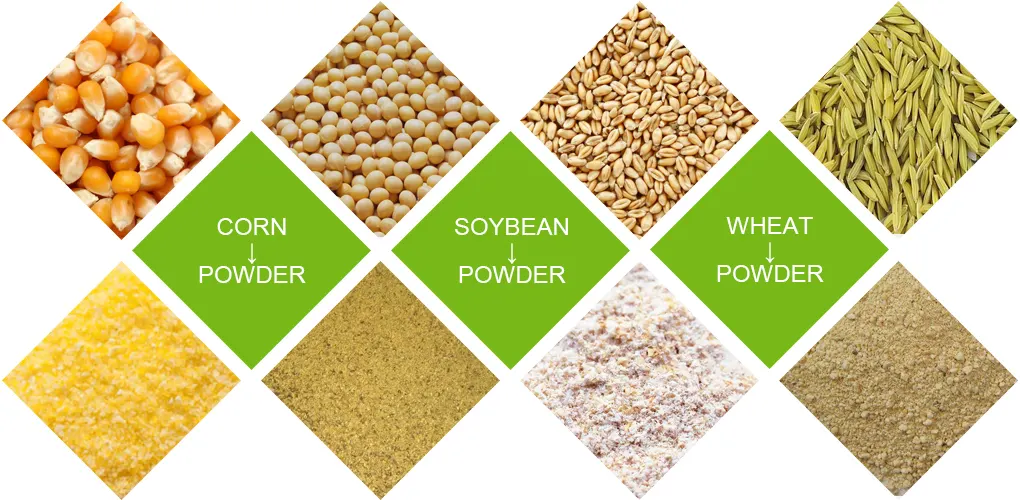
Common raw materials include corn, wheat, barley, rice bran, soybean meal, rapeseed meal, wheat bran, alfalfa meal, mineral sources, vitamins, and other nutritional ingredients. The exact combination depends on the animal species, growth stage, feeding purpose, and nutritional targets.
Energy ingredients such as corn and wheat generally provide carbohydrates, while soybean meal and other protein-rich materials help supply amino acids. Fiber sources can be particularly important for ruminants, whereas young pigs may require ingredients that are easier to digest.
Raw materials also differ in moisture, density, particle size, and flowability. These characteristics influence how materials should be stored and processed. For example, ingredients with high moisture content may require additional drying or storage considerations, while fibrous materials can place greater demands on grinding and conveying equipment.
Therefore, a practical feed formulation should consider both nutritional value and processing characteristics.
Does Particle Size Affect Feed Quality?
Yes. Particle size can influence digestion, mixing uniformity, pellet quality, and equipment performance.
Grinding is commonly used to reduce the particle size of grains and other suitable ingredients before mixing. A hammer mill, for example, can process many cereal grains into a more uniform material.
However, smaller is not automatically better. Excessive grinding can increase energy consumption and may create unnecessary dust. Different animals and feed formulas may also require different particle-size ranges.
The appropriate grinding specification should therefore be determined according to the feed formula and the characteristics of the ingredients. The grinder should then be selected based on the expected throughput, material type, desired particle size, and operating conditions.
In a properly organized livestock feed production line, grinding is integrated with conveying, batching, mixing, and subsequent processing rather than treated as an isolated operation.
Why Is Mixing So Important?
Imagine putting all the ingredients for a cake into a bowl without mixing them. Even if every ingredient is present, one slice could contain much more flour while another contains mostly sugar.
Feed production faces a similar challenge. Vitamins, minerals, protein meals, grains, and other ingredients must be distributed as evenly as possible throughout the batch.
A mixer is therefore one of the most important machines in a feed processing facility. Horizontal mixers, vertical mixers, and other designs can be selected according to the formula, capacity, material properties, and desired mixing performance.
Mixing time also matters. Too little mixing may result in poor uniformity, while unnecessarily long mixing can reduce efficiency.
Liquid ingredients require additional attention. If oil, molasses, or other liquid components are included in the formula, the mixing system may need appropriate spraying or liquid-addition equipment to distribute them evenly.
What Is a Premix and Why Is It Used?
A premix is a concentrated mixture of small-dose ingredients such as vitamins, minerals, amino acids, and other nutritional components. These ingredients are normally used in relatively small quantities compared with grains or protein meals.
Because their inclusion rates are low, distributing them evenly in a large batch can be difficult if they are added directly without suitable preparation.
Premixing provides a practical solution. Small-dose ingredients are first blended into a more uniform carrier mixture, which can then be incorporated into the main feed formula.
A premix feed production line for animal feed plant may therefore involve dedicated dosing, weighing, mixing, conveying, and storage processes. The actual configuration depends on the types and quantities of premix ingredients being handled.
How Does the Pelleting Process Work?
Once the ingredients have been ground, weighed, and mixed, the material can be processed into pellets when the formula and feeding application call for it.
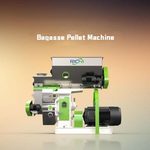
A pellet mill compresses prepared feed through holes in a die. Under pressure and friction, the material forms compact cylindrical pellets that are then cut to the desired length.
Steam conditioning is often used before pelleting in larger commercial operations. Conditioning can improve moisture and temperature distribution and may contribute to better pellet formation.
The choice of die diameter, roller settings, conditioning parameters, and production speed depends on the feed formula and target pellet size.
Different animals may require different pellet diameters. Young animals generally need smaller pellets, while mature livestock may accept larger sizes.
Pelleting is therefore not simply a mechanical compression process. It is closely connected with formula design and material preparation.
Why Is Conditioning Used Before Pelleting?
Conditioning prepares the feed mixture before it enters the pellet mill. In many commercial applications, steam is introduced to increase moisture and temperature under controlled conditions.
This can soften certain ingredients and improve their processing characteristics. It may also help produce more durable pellets and reduce the amount of loose fines after pelleting.
However, the ideal conditioning parameters vary according to the formula. High-fiber materials, grain-based formulas, and formulas containing different protein sources may behave differently.
Operators should therefore avoid assuming that one temperature or conditioning time is suitable for every feed product.
Good process control is more useful than simply pursuing the highest possible conditioning temperature.
What Happens After Pelleting?
Fresh pellets usually contain more heat and moisture than the finished product should have. They therefore need to be cooled before screening and packaging.
A pellet cooler removes heat and excess moisture using controlled airflow. Counterflow and other cooling technologies are commonly used in commercial feed processing.
After cooling, the pellets can pass through a screener. Oversized particles and fines are separated from qualified pellets. Depending on the process design, unsuitable material can be returned to an earlier stage for reprocessing.
Cooling and screening are sometimes underestimated because they do not visually transform the raw material as dramatically as grinding or pelleting. Nevertheless, they have a direct impact on final product stability.
If pellets are packed while still too hot or moist, storage problems can occur. Proper cooling is therefore an important part of quality control.
How Can Feed Plants Reduce Pellet Fines?
Pellet fines refer to small particles that break away from finished pellets. A certain amount may be unavoidable, but excessive fines can reduce product quality and create additional handling work.
Several factors can contribute to fines, including improper grinding, inadequate conditioning, unsuitable die selection, excessive pellet-mill loading, poor cooling, and rough transportation.
The formula itself also matters. Some ingredients naturally produce stronger pellets than others.
Improving pellet quality therefore requires a process-wide approach. Simply increasing pellet-mill pressure may not solve the underlying problem.
A well-adjusted production process should balance grinding, formulation, conditioning, pelleting, cooling, screening, and conveying.
How Large Should a Feed Production Line Be?
Production capacity should be based on actual demand rather than choosing the largest available equipment.
A small farm may only need a relatively compact system capable of producing a few tons per hour. A regional feed manufacturer serving multiple farms may require considerably greater capacity.
Capacity planning should consider both current demand and realistic future growth. If a plant is designed too small, production bottlenecks may appear quickly. If it is significantly oversized, the investment and operating costs may be unnecessarily high.
It is also important to distinguish between theoretical machine capacity and practical plant output. The actual production rate can be affected by material properties, formula changes, downtime, cleaning, maintenance, and operator experience.
For this reason, capacity should be evaluated across the complete process rather than based on the rating of a single machine.
How Long Does It Take to Build a Small Feed Plant?
There is no universal construction period because every project has different requirements.
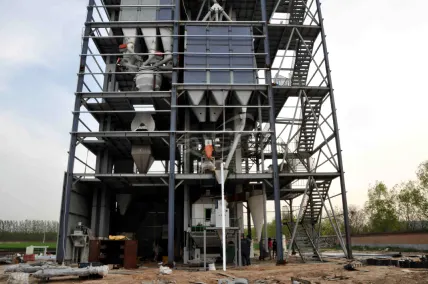
A relatively simple feed plant with standard equipment may be installed more quickly than a large automated facility involving multiple production lines, extensive storage, computerized controls, and complex civil engineering.
The project schedule may include process design, equipment manufacturing, transportation, foundation preparation, installation, electrical work, commissioning, and operator training.
Before construction begins, the layout should be reviewed carefully. Material flow, maintenance access, worker safety, storage space, electrical requirements, and future expansion should all be considered.
Early planning can prevent many problems that are difficult and expensive to correct after equipment installation.
Is Automation Necessary for a Modern Feed Plant?
Automation is not necessarily required for every small operation, but it can become increasingly valuable as production volume grows.
A basic system may rely more heavily on manual operation, while a larger plant can use automated batching, centralized control, automatic weighing, ingredient monitoring, and production data collection.
Automated batching is particularly useful because feed formulas often contain ingredients with very different inclusion rates. Accurate weighing helps maintain consistency between batches.
Automation can also reduce repetitive manual tasks and make it easier to record production information.
However, automation should be matched to the project’s actual needs. A highly sophisticated control system may not provide practical benefits if the facility is very small or if the production process is relatively simple.
What Quality Checks Should Be Performed?
Feed quality control begins with incoming raw materials rather than ending with the finished pellets.
Raw materials should be inspected for factors such as moisture, contamination, appearance, and other relevant quality indicators. Depending on the operation, laboratory testing may also be necessary.
During production, operators can monitor weighing accuracy, mixing uniformity, pellet size, temperature, moisture, and screening performance.
Finished feed may then be tested according to the applicable quality standards and nutritional specifications.
Traceability is another useful element. Recording batch information can help manufacturers identify when and how a particular batch was produced.
Consistent quality is easier to achieve when inspection is integrated into the entire production process.
Can Different Animal Feeds Be Made on One Line?
In many cases, one production system can manufacture several types of compound feed, but the process must be designed with product changes in mind.
For example, a facility might produce cattle feed during one production period and pig feed during another. However, differences in particle size, formulation, additives, pellet diameter, and processing requirements may require careful sequencing.
Cross-contamination is another consideration, particularly when formulas contain ingredients that should not appear in other products.
The production schedule should therefore be arranged logically. Cleaning procedures and suitable equipment design can help reduce material carryover between batches.
A flexible plant is not necessarily one that can make every product simultaneously. Rather, it is one designed to handle the intended product range efficiently and consistently.
What Should Be Considered When Choosing Feed Processing Equipment?
Equipment selection should begin with the material and process requirements.
Important factors include:
- Target production capacity
- Feed types and animal species
- Raw material characteristics
- Required particle size
- Pellet diameter
- Formula complexity
- Number of daily production batches
- Degree of automation
- Available floor space
- Energy requirements
- Maintenance requirements
- Future expansion plans
It is also useful to consider how machines interact with each other. A powerful pellet mill cannot compensate for inadequate grinding or poor mixing upstream.
Similarly, an efficient mixer will not solve problems caused by inaccurate batching.
The objective should therefore be to create a balanced processing system rather than simply selecting individual machines based on their advertised capacity.
Related Post: https://commercialpelletmill.com/cattle-feed-plant-cost/
Why Is Process Layout So Important?
A good layout makes the movement of materials as simple and logical as possible.
Raw materials should move from receiving and storage toward grinding, batching, mixing, conditioning, pelleting, cooling, screening, and finished-product storage with minimal unnecessary handling.
Vertical layouts can sometimes reduce conveying distances, while horizontal layouts may be more suitable for certain buildings or existing facilities.
Maintenance access is equally important. Motors, bearings, screens, dies, rollers, conveyors, and other wear components eventually require inspection or replacement.
If machines are installed too close together, routine maintenance can become unnecessarily difficult.
Therefore, a feed plant layout should be evaluated from both production and maintenance perspectives.
What Makes a Feed Processing Project Economically Practical?
The economics of a feed plant depend on much more than equipment purchase price.
Capital investment may include machinery, buildings, storage systems, electrical installations, dust-control equipment, transportation, installation, and commissioning.
Operating expenses can include electricity, labor, spare parts, maintenance, packaging materials, raw materials, and transportation.
Raw material utilization is especially important because feed ingredients usually represent a major portion of total production costs.
Energy efficiency should also be considered. Grinding, pelleting, conveying, drying, and other processes consume different amounts of energy.
A sensible feasibility study should therefore evaluate the expected production volume, product selling price, raw material costs, operating expenses, and equipment utilization rate.
How Can a New Feed Plant Be Planned More Efficiently?
The most practical approach is to define the project from the inside out.
First, identify the feed products to be manufactured. Then determine the formulas, raw materials, target pellet sizes, expected capacity, and working schedule.
Next, establish the process flow. Once the process is clear, individual machines can be selected and matched to one another.
After that, the layout, storage requirements, electrical system, automation level, and civil engineering requirements can be developed.
This sequence helps avoid a common mistake: purchasing machines before understanding how they will work together.
Companies researching complete feed processing solutions can also compare different equipment configurations and production concepts from manufacturers such as Pellet Mill before finalizing their project specifications.
What Should Be Discussed With an Equipment Manufacturer?
A useful technical discussion should go beyond asking, “How much does the machine cost?”
The manufacturer should understand the feed types, raw materials, required capacity, pellet specifications, expected operating hours, and desired automation level.
It is also helpful to provide information about the available building or proposed site. Floor dimensions, ceiling height, existing structures, electrical conditions, and storage requirements can all influence the final design.
If the project involves multiple feed products, the manufacturer should also know the expected production sequence and whether frequent formula changes will occur.
The more complete the technical information is at the beginning, the easier it becomes to develop a practical process layout.
Final Thoughts: What Should You Focus on First?
A successful feed manufacturing project starts with a clear understanding of the product rather than a machine catalog.
Raw materials determine grinding and handling requirements. Feed formulas determine batching and mixing needs. Pellet specifications influence conditioning and pelleting. Final moisture and temperature determine cooling requirements, while the distribution model affects storage and packaging.
These elements are interconnected, which is why a complete process design is generally more useful than evaluating machines one by one.
For anyone planning a new feed facility, the best starting point is to answer a few basic questions: What animals will the feed serve? What raw materials are available? How much feed needs to be produced each day? What pellet sizes are required? How much automation is appropriate? And how much room is available for future expansion?
Once these questions have clear answers, the equipment configuration becomes much easier to determine. More importantly, the resulting plant is more likely to match the actual production needs instead of simply being a collection of machines.