
Starting a feed pellet production project requires more than deciding how much money can be spent on machinery. The investment should be connected with production demand, available raw materials, factory conditions, labor requirements, and the expected market for finished feed. A machine that looks inexpensive at the purchasing stage may not provide good value if its capacity is unsuitable or its supporting equipment is incomplete.
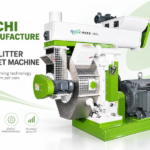
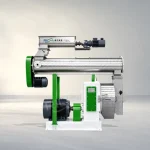
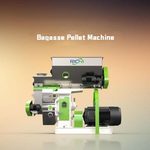
The animal feed pellet machine price is influenced by the machine’s capacity, motor configuration, die specifications, feeding system, conditioning arrangement, automation level, and the equipment included in the production line. Buyers should therefore compare complete configurations instead of comparing one price against another without examining what is included.
Start With Production Demand
Before selecting equipment, a producer should estimate daily and annual feed demand. A small farm producing feed for its own cattle or poultry may only require a modest production rate. A commercial feed manufacturer supplying several customers will need a substantially different system.
A 1-60T/H livestock feed pellet mill covers a wide production range, but that does not mean every project needs the highest available capacity. The appropriate model should be based on actual operating conditions, including working hours, feed formula, pellet diameter, and raw material availability.
For example, if a plant operates for eight hours per day, its hourly requirement will be different from a factory operating two or three shifts. Future demand should also be considered so that the equipment does not become undersized shortly after installation.
The Formula Influences Equipment Selection
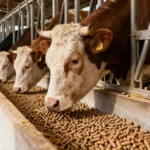
Animal feed formulas are not identical. Corn-based poultry feed behaves differently from cattle formulas containing a higher proportion of forage or fibrous ingredients.
Raw materials need to be evaluated before determining the production configuration. Grinding requirements can change according to ingredient size and desired particle size. Mixing requirements depend on the number and proportion of ingredients. Conditioning requirements can also change with formula composition and moisture.
This is why a quotation should ideally be based on the customer’s actual feed formula rather than a generic specification.
Looking at the Complete Process
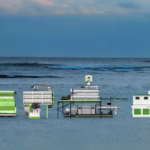
The pellet mill is only one stage of production. A typical feed line can include raw material receiving, crushing, batching, mixing, conditioning, pelleting, cooling, screening, and packing.
If a producer buys only a pellet mill but later discovers that the existing grinder cannot prepare enough material, the expected output may not be achievable. The same problem can occur if the cooler or screen is too small.
Investment calculations should therefore include all equipment necessary to achieve the target production rate.
Automation and Labor Requirements
Automation can influence both initial investment and long-term operating efficiency. Automatic batching, feeding, conveying, temperature monitoring, and centralized controls can reduce repetitive manual operations.
However, a smaller operation may not need the same automation level as a large factory. Over-automation can increase complexity without providing enough practical benefit.
The right approach is to identify which operations need automatic control and which can remain manual without affecting safety or production consistency.
Maintenance Costs Matter
Equipment investment should also include expected maintenance. Dies, rollers, bearings, belts, and other wear components require inspection and eventual replacement.
A machine that is easy to inspect and maintain can reduce downtime. Spare parts availability is also important, especially for plants located far from the equipment supplier.
Regular lubrication, cleaning, die inspection, and roller adjustment can help maintain stable performance. Operators should also understand how raw material changes affect machine load and pellet quality.
Comparing Suppliers Properly
When comparing quotations, buyers should check whether the price includes the main pellet mill only or a broader package. Motor power, feeder, conditioner, control cabinet, spare parts, installation support, and other auxiliary machinery can all influence the final investment.
It is also useful to ask about expected production under specific raw material conditions rather than relying only on a theoretical maximum.
Producers can read more about different equipment configurations before contacting suppliers for project-specific recommendations.
Planning for Future Growth
A feed business may start with one formula and later expand into cattle, poultry, pig, or other feed products. Factory space and utility systems should therefore be planned with some flexibility.
If demand increases, additional pellet mills, storage bins, conveyors, cooling capacity, or packing equipment may be required. Leaving suitable space during the initial design can make later expansion less disruptive.
Richi Pellet Mill equipment can be configured for different animal feed and livestock feed applications according to capacity and process requirements.
Ultimately, the best investment is not necessarily the machine with the lowest purchase price. It is the system that provides an appropriate balance between output, pellet quality, operating cost, maintenance, automation, and future expansion. By evaluating the complete production process, buyers can make a more practical equipment investment and avoid unexpected costs after installation.
view details: https://www.richimanufacture.com/animal-feed-pellet-machine-for-sale/