



Cattle feed production has become increasingly sophisticated as livestock farms and commercial feed manufacturers demand more consistent feed quality, higher production efficiency, better process control, and lower operating costs. Modern cattle feed factories are no longer dependent entirely on manual weighing, feeding, mixing, and packaging. Instead, automation technology is being integrated into almost every stage of the production process.
Automation can help control raw material handling, ingredient batching, grinding, mixing, steam conditioning, pelletizing, cooling, screening, coating, conveying, and packaging. By connecting these processes through centralized control systems, manufacturers can create a more stable and predictable production environment.
This is particularly important for commercial cattle feed production, where even small inconsistencies in ingredient ratios or processing parameters can affect the quality of large quantities of finished feed.
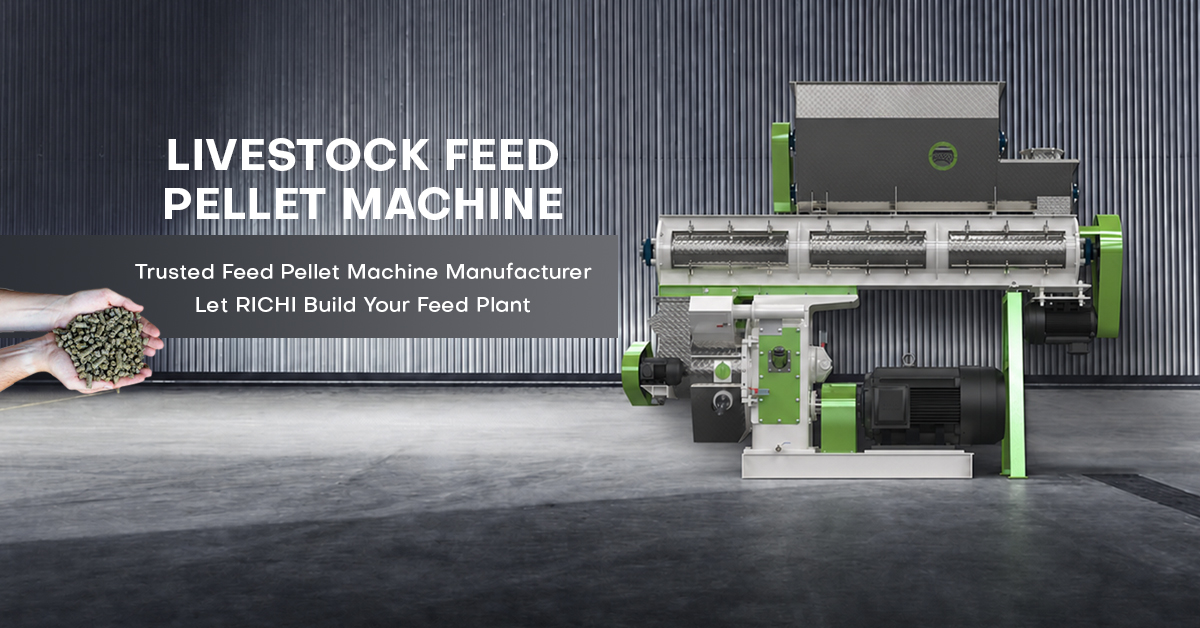
A cow feed pellet mill remains one of the core machines in many cattle feed production lines, but its performance can be significantly improved when it is integrated with automated feeding, conditioning, monitoring, lubrication, and control systems.
Automation does not simply mean replacing workers with machines. Its greater value lies in improving process consistency, reducing avoidable errors, monitoring production conditions, and allowing operators to manage increasingly complex feed manufacturing systems.
What Is Automation in Cattle Feed Production?
Automation in cattle feed production refers to the use of control systems, sensors, programmable logic controllers, weighing equipment, variable-frequency drives, automatic dosing systems, and other technologies to control production processes.
Depending on the scale of the factory, automation may cover:
- Raw material receiving
- Ingredient storage
- Automatic batching
- Grinding
- Mixing
- Steam conditioning
- Pellet mill feeding
- Pelletizing
- Cooling
- Screening
- Liquid coating
- Conveying
- Packaging
- Production monitoring
A small feed factory may use partial automation, while a large commercial plant may operate with a centralized control system.
The appropriate automation level depends on production capacity, formula complexity, labor availability, investment budget, and future expansion plans.
1. Automation Improves Batching Accuracy
One of the most important advantages of automation is more accurate ingredient batching.
Cattle feed formulas may contain many ingredients with different inclusion rates.
For example, a formula may contain:
- Corn
- Barley
- Wheat bran
- Soybean meal
- Sunflower meal
- Alfalfa
- Minerals
- Vitamins
- Salt
- Other additives
Some ingredients may account for a large percentage of the formula, while others may only be added in small quantities.
Manual weighing can create errors, particularly when production volumes increase.
An automated batching system can weigh ingredients according to a programmed formula.
This helps reduce variations between batches and provides more consistent feed production.
2. Automation Reduces Human Error
Human operators are essential to feed production, but repetitive manual operations can create opportunities for error.
Examples include:
- Incorrect ingredient quantities
- Wrong formula selection
- Incorrect feeding sequence
- Inconsistent mixing time
- Incorrect steam addition
- Incorrect machine settings
- Packaging weight errors
Automation can reduce many of these repetitive errors.
For example, once a formula is stored in the control system, the batching system can automatically dose the required ingredients.
Operators can monitor the process rather than manually measuring every ingredient.
3. Automation Supports Formula Management
Modern feed factories may produce several cattle feed formulas.
Different products may be designed for:
- Dairy cattle
- Beef cattle
- Calves
- Growing cattle
- Finishing cattle
- High-producing dairy cows
Each product can have different ingredient ratios.
A computerized control system can store multiple formulas.
The operator can select the appropriate production formula, and the system can automatically control ingredient dosing.
This reduces the need to manually calculate every batch.
4. Automation Improves Mixing Consistency
After batching, ingredients need to be mixed.
Mixing uniformity is essential because nutrients should be distributed throughout the feed.
Automation can control:
- Mixer loading
- Mixing time
- Mixing sequence
- Liquid addition
- Discharge timing
Consistent mixing parameters help produce more uniform batches.
For large commercial feed factories, this can be especially valuable because even a small variation can affect a large volume of finished feed.
5. Automatic Liquid Addition
Some cattle feed formulas contain liquid ingredients such as molasses or oils.
Liquid ingredients can be difficult to distribute consistently when added manually.
Automated pumps and spraying systems can control the amount and timing of liquid addition.
This can help improve:
- Liquid distribution
- Mixing consistency
- Production efficiency
- Formula accuracy
It can also reduce material waste caused by excessive or insufficient liquid addition.
6. Automation Controls Steam Conditioning
Steam conditioning is an important part of many pelleted cattle feed production lines.
During conditioning, steam is introduced into the feed mixture before pelletizing.
The amount of steam and the conditioning time can affect pellet quality.
An automated control system can monitor and regulate relevant process parameters.
This helps reduce fluctuations caused by manual operation.
Stable conditioning can support:
- Better pellet formation
- Improved pellet durability
- More stable production
- Consistent moisture
- More predictable pellet mill performance
7. Automation Improves Cow Feed Pellet Mill Operation
The cow feed pellet mill is one of the most important pieces of equipment in a pelleted cattle feed production line.
However, pellet mill performance depends on stable material feeding, conditioning, die condition, roller adjustment, and operating load.
Automation can help manage several of these factors.
For example, a variable-frequency drive can regulate material feeding into the pellet mill.
If the machine load changes, the feeding rate can be adjusted to help maintain stable operation.
This can reduce sudden overloads and improve production stability.
8. Automatic Load Monitoring
Pellet mills consume significant amounts of energy.
The motor load provides useful information about machine operation.
Automated monitoring can track:
- Motor current
- Load percentage
- Production rate
- Operating time
- Abnormal conditions
If the pellet mill becomes overloaded, the control system may reduce the feeding rate or trigger an alarm.
This can help protect the machine and reduce the risk of mechanical damage.
9. Automatic Lubrication
Lubrication is essential for many pellet mill components.
Manual lubrication requires operators to remember maintenance schedules and apply the correct amount of lubricant.
Automatic lubrication systems can deliver lubricant at predetermined intervals.
This can help:
- Reduce maintenance labor
- Improve lubrication consistency
- Reduce unnecessary wear
- Support equipment reliability
Automatic lubrication is particularly useful for high-capacity feed mills operating for long hours.
10. Automation Improves Production Capacity
Automation does not automatically increase the rated capacity of a machine.
However, it can help the production line operate closer to its designed capacity by reducing interruptions and improving process coordination.
For example, if the batching system, mixer, pellet mill, cooler, and packaging system are properly synchronized, materials can move continuously through the production process.
This reduces waiting time between production stages.
11. Automation Reduces Production Bottlenecks
A feed factory can have bottlenecks in many areas.
For example:
- The grinder may be too slow.
- The mixer may have insufficient capacity.
- The conditioner may not provide enough material.
- The pellet mill may wait for feed.
- The cooler may be undersized.
- The packing machine may not keep up.
An automated control system can monitor the status of different production sections.
This allows operators to identify bottlenecks more quickly.
12. Automation Improves Material Flow
Modern cattle feed production involves moving large quantities of raw materials.
Conveyors, bucket elevators, screw conveyors, and other handling systems transport materials between processing stages.
Automation can control these systems according to the production sequence.
For example, the control system can ensure that the appropriate conveyor starts before an upstream machine begins discharging material.
This helps prevent material accumulation and unnecessary machine operation.
13. Automation Improves Cooling Control
After pelletizing, cattle feed pellets need to be cooled.
The cooling process affects final moisture, temperature, and pellet stability.
Automated cooling systems can monitor relevant conditions and adjust operating parameters.
This helps ensure that pellets are sufficiently cooled before screening and packaging.
Without proper cooling, warm pellets may create storage problems after packaging.
14. Automated Screening Improves Product Consistency
Screening separates acceptable pellets from fines and broken particles.
An automated production line can coordinate the screen with the cooling and conveying systems.
If the amount of fines increases unexpectedly, operators can investigate upstream causes such as:
- Poor conditioning
- Incorrect die compression
- Worn rollers
- Incorrect moisture
- Improper cooling
This creates a connection between quality control and equipment monitoring.
15. Automation Helps Control Packaging
Packaging is another area where automation can improve consistency.
Automatic packing machines can control:
- Bag weight
- Filling speed
- Bag positioning
- Sealing
- Product discharge
Accurate packaging is important for commercial feed manufacturers.
If every bag must contain a specific amount of feed, automated weighing can reduce variation.
16. Automation Reduces Labor Requirements
Labor costs are an important consideration for commercial feed factories.
Manual production requires workers to perform repetitive tasks such as:
- Weighing ingredients
- Opening material gates
- Monitoring mixers
- Controlling steam
- Operating conveyors
- Filling bags
Automation can reduce the amount of manual intervention required.
Instead of assigning workers to every individual process, a smaller team can monitor the overall production system.
This does not eliminate the need for skilled workers. Instead, it changes their role from repetitive manual operation to process management, quality control, and equipment maintenance.
17. Automation Improves Worker Safety
Feed production involves heavy machinery, rotating components, dust, steam, heat, and large quantities of materials.
Automation can reduce the need for operators to remain close to machinery during normal operation.
For example, remote monitoring allows operators to observe machine status from a control room.
Safety alarms and automatic shutdown systems can also respond to abnormal operating conditions.
Safety features should always be designed according to the equipment and applicable workplace requirements.
18. Automation Supports Real-Time Monitoring
One of the major advantages of modern control systems is real-time information.
Operators can monitor:
- Production rate
- Machine load
- Motor status
- Material flow
- Temperature
- Steam conditions
- Alarm status
- Operating time
This information helps operators understand what is happening inside the production line.
Instead of waiting until a problem becomes visible in the finished product, operators may be able to identify abnormal conditions earlier.
19. Automation Supports Quality Control
Feed quality depends on multiple processing parameters.
Automation can help record and monitor these parameters.
For example, the system can record:
- Ingredient quantities
- Mixing time
- Conditioning parameters
- Pellet mill load
- Production output
- Cooling conditions
- Packaging weight
These records can provide useful information for quality management.
If a batch does not meet expectations, production data can help operators investigate possible causes.
20. Automation Improves Batch Traceability
Traceability becomes increasingly important as feed factories grow.
A computerized system can record which ingredients were used in a specific production batch.
It may also record:
- Formula number
- Batch time
- Production quantity
- Equipment status
- Operator information
- Packaging information
This creates a more organized production history.
21. Automation Helps Reduce Material Waste
Material waste can occur at many stages.
Examples include:
- Overdosing ingredients
- Spillage
- Excessive fines
- Incorrect batching
- Poor conveying
- Packaging errors
Automation can reduce some of these losses by controlling ingredient dosing and material flow more accurately.
Reducing waste can improve the overall economic efficiency of the feed factory.
22. Automation Helps Manage Energy Consumption
Electricity is one of the major operating costs in feed production.
Grinding, pelletizing, conveying, cooling, and other processes consume energy.
Automation can help monitor energy consumption and identify abnormal operating conditions.
Variable-frequency drives can also regulate the speed of selected motors according to actual production requirements.
For example, a conveyor does not always need to operate at maximum speed.
Adjusting motor speed to actual material flow can help reduce unnecessary energy consumption.
23. Variable-Frequency Drives in Cattle Feed Production
Variable-frequency drives, or VFDs, are commonly used in modern feed processing equipment.
They can control motor speed for applications such as:
- Feeders
- Conveyors
- Hammer mills
- Mixers
- Pellet mills
- Fans
- Pumps
The ability to adjust motor speed can improve process flexibility.
For example, the feeding rate into a pellet mill can be adjusted according to the machine load.
This can help stabilize production.
24. Automation and High-Fiber Cattle Feed
High-fiber feed can create additional processing challenges.
Ingredients such as:
- Alfalfa
- Grass hay
- Straw
- Forage
- Other fibrous materials
may require specialized grinding and pelletizing conditions.
Automation can help maintain stable feeding rates and process parameters when material characteristics change.
This is particularly useful for production lines that process different formulas throughout the day.
25. Automation for Molasses-Based Feed
Molasses is widely used in some cattle feed formulas.
Its sticky characteristics can create challenges in dosing and mixing.
Automated liquid dosing systems can help control the amount of molasses added.
Automated spraying systems can also help distribute liquid ingredients more evenly.
This can improve process consistency compared with uncontrolled manual addition.
26. Automation Makes Formula Changes Easier
Commercial feed manufacturers often produce several products.
Changing formulas manually can require many adjustments.
A computerized control system can store multiple recipes.
When the operator selects another formula, the system can adjust ingredient dosing according to the programmed recipe.
This can reduce setup time and improve production flexibility.
27. Automation and Multiple Pellet Sizes
Some factories produce cattle feed in different pellet diameters.
Changing pellet sizes may require die replacement and process adjustments.
Automation can help manage production records and operating parameters associated with different products.
The operator can use standardized settings for each product while still making manual adjustments when required.
28. Automation Supports Preventive Maintenance
Automation can also contribute to maintenance management.
A control system can record:
- Operating hours
- Motor starts
- Production volume
- Alarm events
- Equipment runtime
These records can help maintenance teams plan inspections.
For example, if a pellet mill has reached a specified number of operating hours, the maintenance team can schedule inspection of the die, rollers, bearings, and lubrication system.
29. Automation Can Reduce Unplanned Downtime
Unexpected downtime can be costly for commercial feed factories.
Automation can detect abnormal conditions such as:
- Motor overload
- Excessive temperature
- Conveyor blockage
- Low material level
- Equipment failure
An alarm can alert the operator before the problem develops into a larger mechanical failure.
In some systems, automatic shutdown may be used to protect equipment.
30. Centralized Control Systems
Large cattle feed factories often use centralized control rooms.
From a central interface, operators can monitor and control multiple sections.
The control system may display:
- Process flow
- Machine status
- Production data
- Alarm information
- Batch information
- Equipment parameters
This makes it easier to manage complex production lines.
31. Automation Does Not Eliminate Human Expertise
Despite its advantages, automation does not remove the need for experienced personnel.
Operators are still needed to:
- Inspect raw materials
- Check feed quality
- Monitor equipment
- Adjust production conditions
- Perform maintenance
- Handle unexpected situations
Automation should therefore be viewed as a tool that supports skilled workers rather than a complete replacement for human expertise.
32. Choosing the Right Automation Level
Not every cattle feed factory needs a fully automated system.
The appropriate automation level depends on:
Production Capacity
Large factories generally benefit more from automation.
Formula Complexity
Factories producing many formulas may require advanced recipe management.
Labor Costs
Higher labor costs can make automation more attractive.
Investment Budget
Automation requires additional investment.
Future Expansion
Factories expecting significant growth may benefit from automation from the beginning.
Product Requirements
Feed products requiring strict consistency may benefit from more advanced process control.
33. Manual, Semi-Automatic, and Fully Automatic Systems
Manual Production
Operators control most equipment manually.
This can be suitable for small production volumes.
Semi-Automatic Production
Some processes such as batching and pelletizing are automated, while others require manual operation.
This is often suitable for medium-scale plants.
Fully Automatic Production
The major processes are integrated through a centralized control system.
This is common in large commercial feed factories.
The right choice depends on actual production requirements.
34. Automation and Investment Cost
Automation increases initial investment because the factory may require:
- PLC control systems
- Sensors
- Weighing systems
- Electrical cabinets
- VFDs
- Automatic dosing systems
- Monitoring software
- Control room equipment
However, investment should be evaluated over the entire operating life of the factory.
Potential benefits may include:
- Reduced labor requirements
- Better batching accuracy
- Lower material waste
- More stable production
- Easier quality control
- Improved equipment utilization
The economic value of automation should therefore be assessed based on the specific production scale.
(Learn about automatic cattle feed manufacturing plant cost)
35. Automation and the Cow Feed Pellet Mill
The pellet mill is an ideal example of how automation can improve production.
A modern cow feed pellet mill can be integrated with:
- Automatic feeders
- VFDs
- Load monitoring
- Automatic lubrication
- Steam conditioning
- Centralized control
- Safety protection
- Production data collection
Instead of operating as an isolated machine, the pellet mill becomes part of an integrated production system.
Stable feeding and conditioning can help the pellet mill operate more consistently.
At the same time, load monitoring and safety systems can help protect the machine from abnormal conditions.
36. Designing an Automated Cattle Feed Production Line
A typical automated production process may look like:
Raw Material Receiving → Cleaning → Grinding → Automatic Batching → Mixing → Steam Conditioning → Pelletizing → Cooling → Screening → Coating → Automatic Packaging
The control system can coordinate the operation of each section.
For example:
- Ingredients are automatically weighed.
- Materials enter the mixer according to the programmed sequence.
- The mixer operates for a defined period.
- The conditioned feed enters the pellet mill.
- Pellet mill feeding is adjusted according to load.
- Fresh pellets move automatically to the cooler.
- Cooled pellets are screened.
- Finished pellets move to packaging.
- The finished bags are transferred to storage.
This reduces the need for manual intervention.
37. Automation and Turnkey Feed Plant Design
Automation should be considered during the initial factory design stage rather than added after all equipment has been installed.
A turnkey engineering provider can integrate:
- Process design
- Equipment selection
- Electrical design
- Automation
- Factory layout
- Installation
- Commissioning
- Operator training
This integrated approach can help ensure that equipment and control systems communicate properly.
(investigate this site:RICHI Pelletizer )
38. Common Automation Mistakes
Several mistakes should be avoided.
Over-Automating a Small Factory
A highly complex system may not be economically justified for a very small operation.
Under-Automating a Large Factory
Too much manual operation can create unnecessary labor requirements and process inconsistencies.
Ignoring Operator Training
Advanced systems still require trained operators.
Focusing Only on Hardware
Software, sensors, electrical components, and maintenance support are also important.
Failing to Plan for Expansion
The control system should ideally allow future equipment additions.
39. How to Decide Whether Automation Is Worthwhile
Before investing in automation, consider:
- Current production volume
- Labor requirements
- Labor costs
- Number of formulas
- Desired product consistency
- Production shifts
- Future capacity
- Equipment complexity
- Quality-control requirements
- Investment budget
A cost-benefit analysis can help determine the appropriate automation level.
40. The Future of Automated Cattle Feed Production
Automation is likely to become increasingly important as feed factories become larger and more complex.
Future systems may combine:
- Advanced sensors
- Real-time production monitoring
- Automated recipe management
- Energy monitoring
- Predictive maintenance
- Digital quality control
- Remote equipment monitoring
- Production data analysis
These technologies can provide manufacturers with greater visibility into their production processes.
The goal is not simply to make factories more automated. The larger objective is to make feed production more consistent, efficient, controllable, and adaptable.
Conclusion
Automation matters in cattle feed production because it helps manufacturers control complex processes with greater consistency.
From automatic ingredient batching to computerized mixing, steam conditioning, pellet mill feeding, cooling, screening, and packaging, automation can reduce repetitive manual work while improving process control.
A cow feed pellet mill can benefit significantly from automation. Stable feeding, load monitoring, automatic lubrication, variable-frequency control, and centralized process management can help integrate the pellet mill into a more reliable production system.
However, automation should always be matched to the actual requirements of the factory. A small farm may only need a semi-automatic system, while a large commercial feed manufacturer may benefit from comprehensive centralized control.
The most effective approach is to design automation together with the feed formula, raw materials, production capacity, equipment configuration, factory layout, and future expansion plan.
When these elements are properly integrated, automation can help cattle feed manufacturers achieve more accurate batching, more consistent processing, better equipment utilization, reduced material waste, improved production monitoring, and a more stable finished feed product.