


Animal nutrition is no longer only about selecting the right ingredients. As livestock and rabbit farming become increasingly commercialized, feed producers must also consider consistency, storage, handling, labor, energy consumption, and production efficiency.
For a small farm, feed may be prepared manually or with relatively simple equipment. But as the number of animals increases, these methods can become difficult to maintain. Inconsistent particle size, uneven mixing, excessive dust, and poor storage stability can all affect the final feed.
This is why pellet production has become an important part of modern animal nutrition systems.
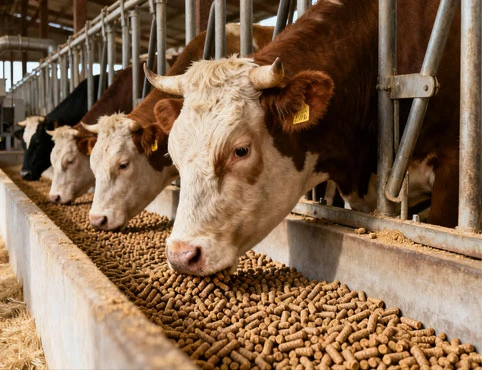
Pellets provide a standardized physical form that can make feed easier to handle, transport, store, and distribute. More importantly, the pelletizing process can bring different ingredients together into a relatively uniform product.
However, building an efficient feed production system requires more than simply purchasing a pellet mill. The entire process—from ingredient preparation to final packaging—needs to work together.
Why Does Feed Form Matter?
Animals do not consume ingredients only according to their nutritional value. The physical characteristics of feed also influence how easily it can be handled and consumed.
Loose mash feed can separate during transportation or storage. Heavier particles may settle while lighter ingredients remain near the surface. This can create inconsistencies between what was formulated and what animals actually consume.
Pellets help reduce this problem by combining ingredients into a more uniform physical form.
A properly manufactured pellet can contain grains, protein sources, minerals, vitamins, fiber, and other ingredients in a consistent structure.
This is particularly useful for commercial farms where feed needs to be distributed efficiently across many animals.
The Production Process Begins Before Grinding
Many feed producers focus heavily on the pelletizing stage, but preparation begins much earlier.
Raw materials may arrive in different forms:
- Whole grains
- Oilseed meals
- Hay
- Alfalfa
- Bran
- Corn
- Wheat
- Soybean meal
- Mineral additives
These materials have different particle sizes and physical characteristics.
Before they can be combined effectively, some need to be cleaned, ground, screened, or otherwise prepared.
A good production process therefore begins with raw-material assessment.
For example, whole corn kernels may require grinding before mixing, while soybean meal may already have a suitable particle structure.
The objective is not to process every ingredient in exactly the same way. Instead, each ingredient should receive the preparation it needs.
Why Particle Size Matters
Particle size influences mixing uniformity, pellet quality, animal acceptance, and energy consumption.
If particles are too large, they may not distribute evenly through the feed mixture. Large particles can also make pellet formation more difficult.
If everything is ground excessively fine, however, energy consumption can increase and dust levels may rise.
Therefore, feed grinding should be optimized rather than maximized.
A well-designed production line considers the characteristics of each ingredient and the requirements of the final feed.
This approach is particularly important when producing different feed formulas in the same factory.
Mixing Is Where the Formula Becomes a Product
Once ingredients have been prepared, they need to be mixed accurately.
This stage is often underestimated.
A feed formula may contain only a small quantity of vitamins, minerals, or additives, but these ingredients still need to be distributed consistently throughout the batch.
Poor mixing can result in nutritional variation between portions of feed.
A good mixer should therefore provide reliable blending while minimizing segregation after mixing.
The order in which ingredients enter the mixer can also influence the final result.
For larger factories, automated batching and weighing systems can improve accuracy and reduce manual intervention.
What Does Pelletizing Actually Add?
Pelletizing changes the physical form of the mixed feed.
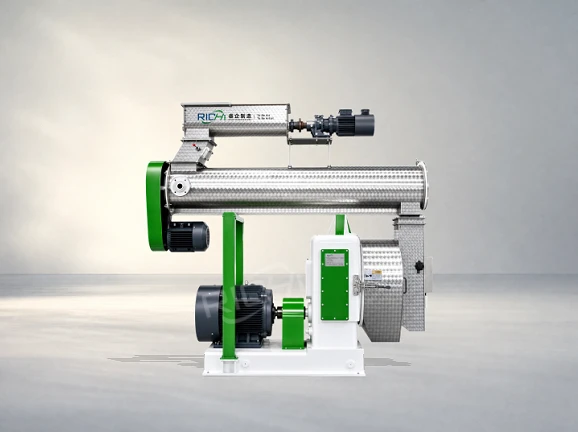
The prepared mixture is fed into the compression chamber, where rollers press the material through openings in a die.
Pressure and friction create cylindrical pellets that are cut to the desired length.
The final pellet diameter can be selected according to the target animal and feeding application.
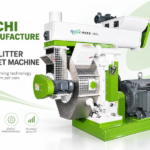
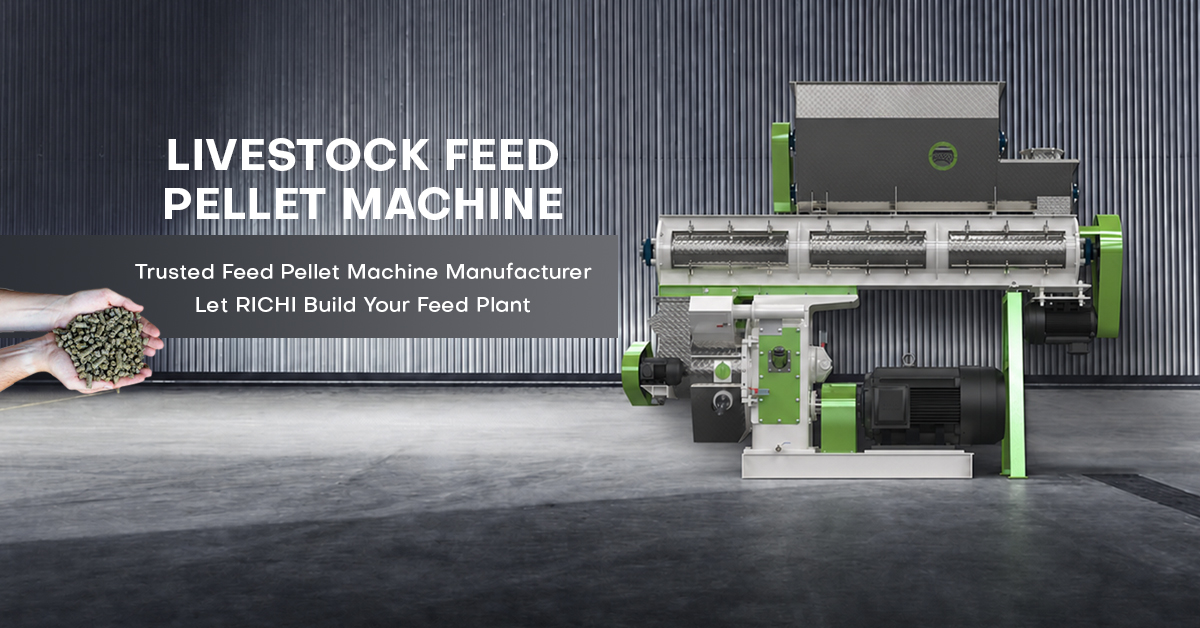
This is where an Animal Feed pellet mill becomes an important part of a commercial feed system.
However, the pellet mill should not be viewed in isolation.
Its output must match the capacity of the cooler, screen, conveyor, storage, and packaging systems.
Rabbit Feed Requires Particular Attention
Rabbits have specific dietary requirements, and their feed often contains a meaningful proportion of forage or fibrous ingredients.
Alfalfa, grass, hay, bran, grains, and other ingredients may be incorporated into rabbit feed depending on the formulation.
Pellet diameter and density should also be appropriate for the target animals.
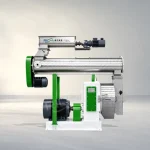
For a smaller commercial operation, a 1-2 T/H rabbit pellet machine for sale can represent a practical production scale when raw-material availability and market demand support it.
The important point is that capacity should be based on actual feed requirements.
A machine capable of producing more feed than the farm can consume may increase investment and operating costs without creating corresponding benefits.
What Makes Alfalfa Valuable in Feed Production?
Alfalfa is widely recognized as a valuable forage ingredient because of its nutritional profile and fiber content.
It can be processed into pellets either as a relatively simple forage product or as part of a more complete animal feed formulation.
The physical condition of alfalfa matters.
Freshly harvested material may contain excessive moisture, while stored hay may be considerably drier. Long stems may also require size reduction before pelletizing.
A commercial producer should therefore evaluate moisture, fiber length, storage condition, and required pellet size before selecting equipment.
For larger operations, alfalfa pellet production can also be integrated with other feed manufacturing processes.
Why Should Feed Producers Think About Capacity Differently?
Production capacity is often expressed in tons per hour, but this number does not tell the whole story.
A factory operating one shift per day has different requirements from a facility running around the clock.
Similarly, a feed mill serving one farm has different requirements from a commercial producer selling to multiple livestock operations.
Capacity planning should therefore consider:
Daily feed demand × operating days × expected utilization
For example, a facility may technically require 5 tons per hour but only operate for several hours per day. Another business may require continuous production at a similar hourly rate.
This difference can significantly affect equipment selection.
Automation Is About Consistency, Not Just Labor Saving
Automation is often associated with reducing labor, but consistency may be an even greater benefit.
An automated system can coordinate:
- Ingredient weighing
- Batching
- Mixing
- Feeding
- Pelletizing
- Cooling
- Screening
- Packaging
Consistent material flow can help maintain stable production.
For example, if too much material enters the pellet mill at once, the machine may experience excessive load. If the feeding rate drops too much, production efficiency may decrease.
Automated control can reduce these fluctuations.
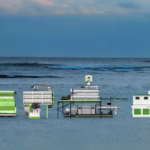
For larger facilities evaluating industrial animal feed equipment for sale, automation should therefore be considered as part of overall process stability rather than simply a labor-saving option.
What Happens After Pelletizing?
Fresh pellets are not always ready to package immediately.
Pelletizing generates heat through friction and compression. Fresh pellets may also contain moisture that needs to stabilize.
Cooling reduces temperature and helps prepare the pellets for storage.
Screening then removes fines and broken pellets.
This creates a basic post-pelletizing sequence:
Pelletizing → Cooling → Screening → Packaging
The cooler and screen should be matched to the pellet mill’s actual output.
If the downstream equipment is undersized, the pellet mill may need to slow down or stop.
Why Storage Should Be Planned Early
Feed production does not end when pellets are packaged.
Finished feed needs to remain stable until it reaches the farm.
Poor storage can lead to moisture absorption, deterioration, contamination, or physical damage.
Storage design should consider:
- Warehouse humidity
- Ventilation
- Bag stacking
- Bulk storage
- Loading access
- Inventory rotation
- Pest management
Raw-material storage is equally important.
If a factory purchases grains or forage in large quantities during harvest season, sufficient storage capacity may reduce supply interruptions later.
Can One Production Line Make Different Feeds?
Yes, provided that the system is designed for flexibility.
A feed factory may produce:
- Rabbit feed
- Goat feed
- Sheep feed
- Cattle feed
- Poultry feed
- Other formulated feeds
Each formula can have different ingredient proportions and pellet specifications.
This means production scheduling becomes important.
The factory may need to clean equipment between formulas, adjust die specifications, modify batching parameters, and change packaging settings.
A flexible production line can make these transitions easier.
Why Goat Feed Needs a Different Approach
Goats are ruminants, and their diets often require appropriate levels of fiber and other nutrients.
Feed formulations can contain forage ingredients, grains, protein sources, minerals, and other components.
The physical form of the feed should also suit the feeding system.
For a medium-scale operation, a 2-3 T/H goat feed pellet making machine for sale may be considered when there is sufficient local demand and raw-material availability.
Again, capacity should be based on realistic production requirements rather than simply selecting the largest machine.
What Makes a Feed Pellet Successful?
A good pellet should not only look uniform.
It should also have appropriate:
- Durability
- Density
- Diameter
- Moisture
- Length
- Handling characteristics
Pellet durability is influenced by multiple factors, including raw material composition, particle size, moisture, die specifications, compression, and cooling.
If pellets break excessively, producers should investigate the complete process rather than immediately assuming that the pellet mill is defective.
The Economics of Feed Production
Feed production economics depend on several variables.
The basic cost structure may include:
Ingredients + electricity + labor + maintenance + packaging + storage + transportation
On the revenue side, producers need to consider the selling price of the finished feed or the savings achieved by producing feed internally.
For farms producing their own feed, the comparison should include the cost of purchasing commercial feed.
If locally available ingredients can be purchased economically and processed efficiently, on-site production may offer greater control over feed formulation and supply.
Building a Feed Mill Around Real Demand
One of the most common mistakes in equipment selection is starting with the machine instead of the market.
A better process is:
Identify animals → determine feed demand → define formula → analyze raw materials → calculate capacity → design process → select equipment
This sequence helps prevent overinvestment.
It also creates opportunities for future expansion.
A small facility can begin with a practical capacity and later add storage, batching, or packaging systems as demand increases.
Conclusion
Modern animal feed production is about more than turning ingredients into pellets.
It is a coordinated process involving raw-material management, grinding, batching, mixing, pelletizing, cooling, screening, storage, and distribution.
The right system should reflect the target animals, local ingredients, production capacity, operating schedule, and final market.
Whether a producer is making rabbit feed, alfalfa-based products, goat feed, or a broader range of livestock diets, the most effective strategy is to design the production process around actual requirements.
A well-planned pellet plant can provide more than production capacity. It can create a stable workflow that improves consistency, simplifies handling, and gives producers greater control over the finished feed.
For businesses comparing equipment configurations, technical specifications and practical project examples can also provide helpful resources when evaluating different approaches.
Ultimately, the best feed production system is not necessarily the largest or most automated one. It is the system that matches available ingredients, realistic demand, operating conditions, and long-term business goals.