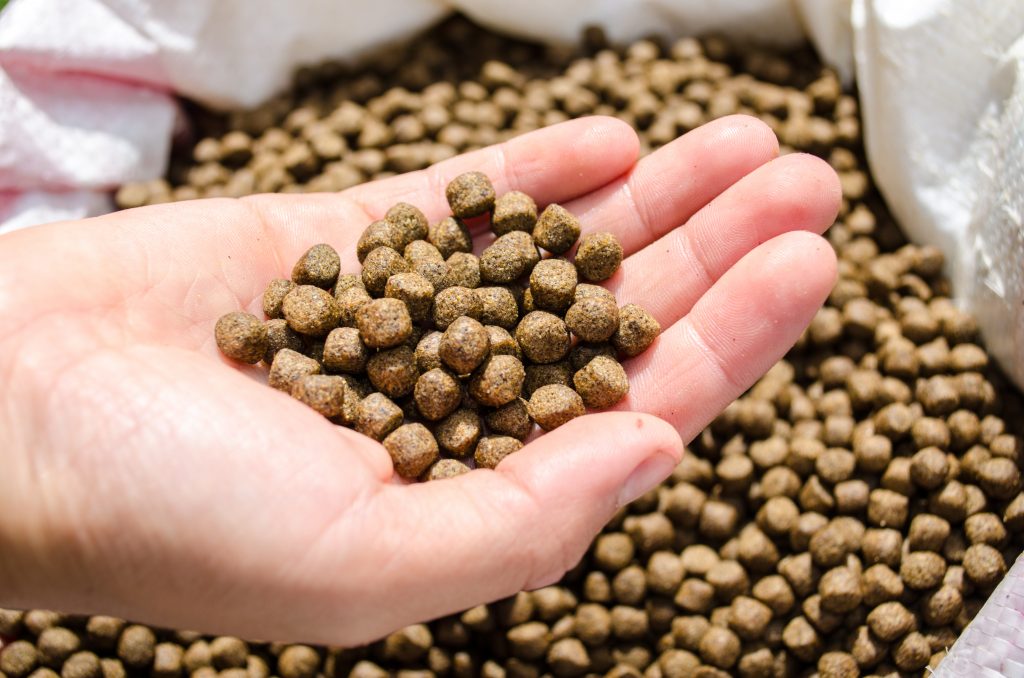
If you’ve ever thrown sinking pellets into a pond and watched them disappear before the fish even noticed, you already know the problem. The feed goes down. The fish might find it. Or they might not. You can’t see how much they’re eating. You can’t adjust the ration based on what’s left. You’re basically feeding blind.
Now imagine the alternative. You toss pellets onto the water, and they float. The fish surface, feed actively, and you can see exactly how much they’re consuming. You can adjust the feeding rate in real time. You can observe fish behavior and spot health issues early. You’re in control.
That’s the difference floating feed makes. It’s not just about convenience—it’s about efficiency, growth, and profitability. And the equipment that produces that floating feed is central to any serious aquaculture operation.
What Makes Feed Float?
The secret behind floating feed isn’t the ingredients. It’s the processing. Floating feed is made through a high-temperature, high-pressure process called extrusion. The ingredients are cooked under pressure, and when they’re released through the die, the sudden pressure drop causes the moisture inside to vaporize instantly. The steam expands, creating thousands of tiny air pockets inside the pellet. The result is a lightweight, porous pellet that floats on the surface.
Extrusion also does more than create buoyancy. It gelatinizes the starches, making them more digestible. It denatures proteins, improving amino acid availability. It kills pathogens that might be present in the raw ingredients. The feed that comes out of the extruder is cooked, safe, and highly digestible—and it floats.
Why Floating Feed Works Better
Floating feed changes the way you manage your fish farm. The most immediate benefit is visibility. When feed floats, you can see exactly how much your fish are eating. You can adjust the ration on the spot. You’re not guessing.
The improved visibility also helps you monitor fish health. Fish that aren’t feeding are fish that are stressed or sick. Spotting reduced feeding activity early lets you intervene before problems escalate.
Floating feed reduces waste. Sinking feed that isn’t consumed settles to the bottom and decomposes, polluting the water and driving up your biological oxygen demand. Floating feed stays where you can see it. If the fish aren’t eating, you can stop feeding and save money.
Feed conversion improves too. Fish that eat floating feed tend to consume it more efficiently because they feed actively at the surface. The reduced waste and improved digestibility combine to lower your feed conversion ratio.
The Science of Extrusion
Extrusion is a cooking process, not just a shaping process. The ingredients—fishmeal, plant proteins, grains, oils, and micronutrients—are ground to a fine powder and mixed. The mixture is preconditioned with steam to start the cooking process.
The conditioned material is fed into the extruder barrel. Inside the barrel, a screw or twin screws convey the material forward. As it moves, it’s subjected to increasing pressure and temperature. The material is cooked under pressure.
At the end of the barrel, the material is forced through a die. The sudden release of pressure causes the moisture inside to flash vaporize. The material expands, taking on the porous structure that gives it buoyancy. The extruded material is cut to length by rotating knives.
The pellets emerge hot and moist. They’re dried to reduce the moisture content to about 10%. The finished pellets are stable, durable, and ready for feeding.
The Equipment
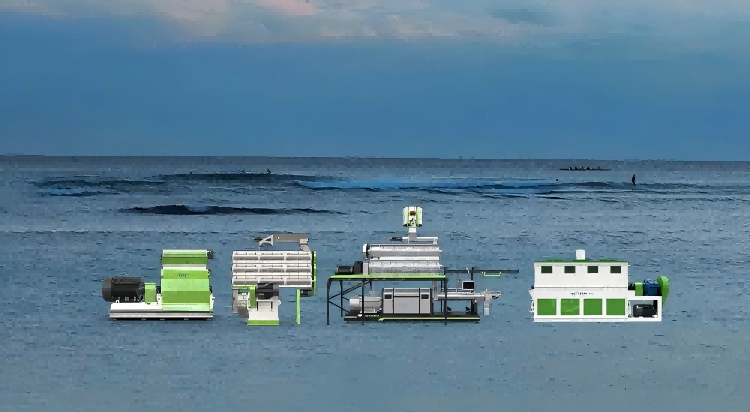
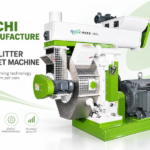
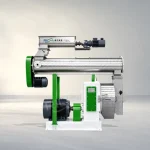
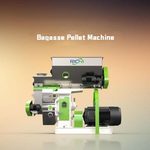
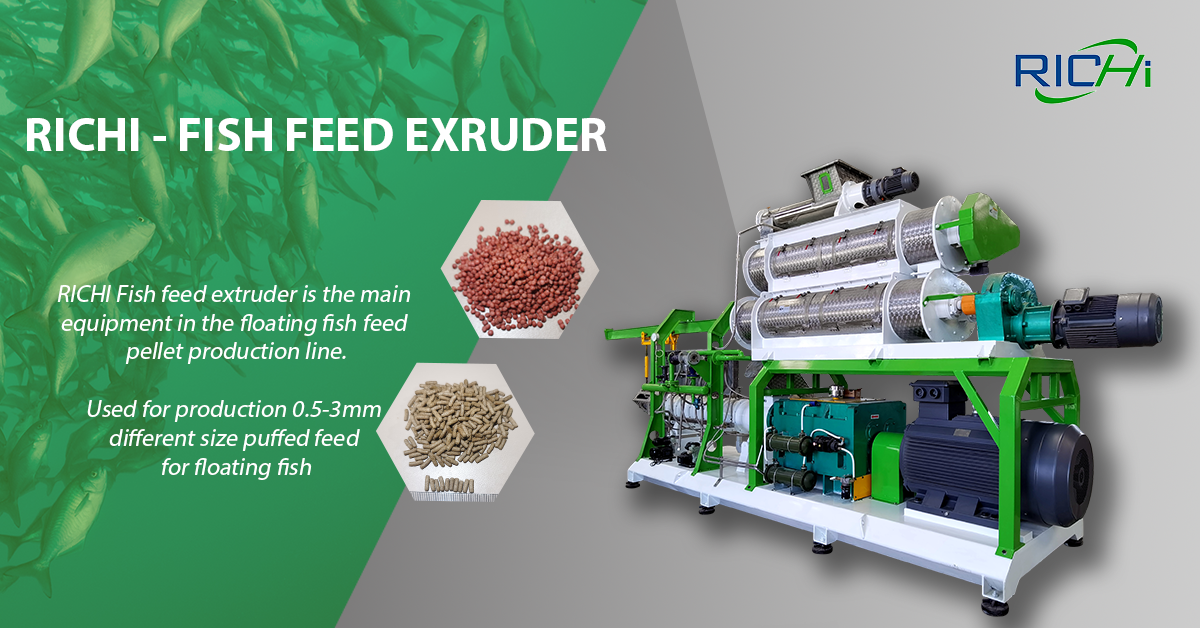
A floating fish feed extruder is specialized equipment designed for aquaculture feed production. The extruder must generate the right combination of temperature, pressure, and shear to produce consistent floating pellets.
The extruder barrel is heated, typically by electrical heaters or by steam injection. The temperature is controlled to achieve the degree of cooking required for the specific formulation. The screw configuration determines the shear applied to the material.
The die determines the pellet size. For fish feed, pellet sizes typically range from 1 to 10 millimeters, depending on the species and the age of the fish. The die holes must be precisely machined to produce consistent pellets.
The cutter is another important component. The rotating knives cut the extruded material to the desired length. The cutter speed determines the pellet length.
Richi Machinery has developed extruders specifically for aquaculture applications. The experience with different formulations and different fish species informs the equipment design. The result is consistent, reliable production of floating feed.
The Benefits of Twin-Screw Extrusion
The extruder that produces floating feed can be single-screw or twin-screw. Twin-screw extruders offer some advantages for aquaculture feed production.
Twin-screw extruders have better mixing capabilities. The intermeshing screws provide positive displacement, meaning the material moves consistently through the barrel regardless of its characteristics. This reduces the variability in the finished product.
Twin-screw extruders handle higher fat formulations better. Fish feed often contains significant fat content, which can cause slippage in single-screw extruders. The positive displacement of twin-screw extruders maintains consistent conveying.
The self-wiping action of the twin screws reduces material buildup inside the barrel. This simplifies cleaning between runs and reduces the risk of contamination.
The Importance of Dryer and Coater
The pellets that emerge from the extruder are hot and moist. They need to be dried to a stable moisture content. The drying step is essential for storage stability and pellet durability.
The dryer removes moisture from the pellets. The drying temperature must be controlled to prevent damage to the nutrients. The drying time determines the final moisture content.
After drying, the pellets are often coated. Fish feed often includes oils that are added after extrusion to protect them from the heat of cooking. The coating also improves the palatability of the feed.
The coater applies a uniform layer of oil or other additives. The coating improves the nutritional value and the appeal of the feed.
The Economics
The economics of floating feed production depend on several factors. The cost of ingredients, the processing cost, and the market price for floating feed all affect the profitability.
The extrusion process is energy-intensive. The conditioning, cooking, and drying all consume energy. The energy cost is a significant component of the total processing cost.
The savings come from improved feed conversion and reduced waste. Floating feed typically delivers better feed conversion than sinking feed. The improved efficiency offsets the higher processing cost.
For fish farmers, the investment in a floating feed extruder can be justified by the savings in feed costs and the improvement in growth rates. The payback period depends on the scale of the operation and the local market conditions.
The Practical Reality
Floating feed production requires attention to detail. The conditioning, extrusion, drying, and coating steps all affect the final product quality. The equipment must be operated correctly to achieve consistent results.
The formulation must be tailored for the specific species. Different fish species have different nutritional requirements and different preferences for pellet size and texture.
The equipment must be maintained properly. The die and cutter are wear items that need periodic replacement. The bearings and seals need regular attention.
For more detailed information, you could try this out to explore equipment options and production systems. The technology is proven, and the benefits are real. For fish farmers looking to improve their operations, floating feed production offers a practical path.