



The rapid development of aquaculture has increased the demand for high-quality fish feed that can support efficient growth, improve feed utilization, and reduce production costs. As fish farming becomes more intensive, feed manufacturers require advanced processing technologies to produce feed pellets with excellent digestibility, water stability, and nutritional performance.
Among different aquatic feed production technologies, wet type fish feed extrusion has become one of the most important methods for manufacturing premium floating and sinking fish feed. Unlike traditional pelletizing methods, wet extrusion uses a combination of moisture, steam, heat, pressure, and mechanical shear to transform raw materials into highly stable feed pellets with improved physical and nutritional characteristics.
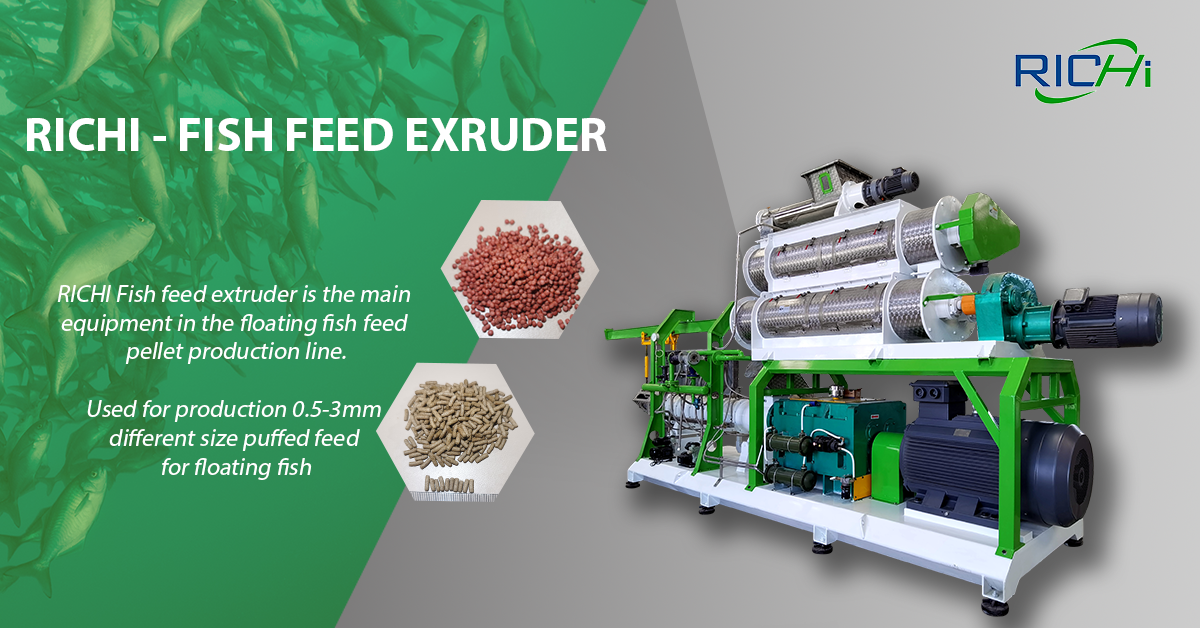
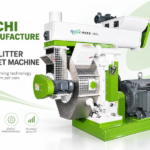
A modern fish food extruder is the core equipment used in the wet extrusion process. It provides precise control over processing conditions, allowing manufacturers to produce feed products suitable for different aquatic species, including tilapia, carp, catfish, salmon, trout, shrimp, and other farmed aquatic animals.
Understanding how wet type fish feed extrusion works helps feed producers optimize production processes, improve feed quality, and select the right equipment for commercial aquafeed manufacturing.
What Is Wet Type Fish Feed Extrusion?
Wet type fish feed extrusion is an advanced feed processing technology that uses additional water and steam during conditioning before the material enters the extruder. The process creates an ideal environment for starch gelatinization, ingredient modification, and pellet expansion.
The main purpose of wet extrusion is to improve the physical and nutritional properties of aquatic feed.
Compared with traditional feed pelletizing, wet extrusion offers several advantages:
- Better starch gelatinization
- Higher feed digestibility
- Improved floating ability
- Stronger water stability
- More flexible feed formulation
- Better production consistency
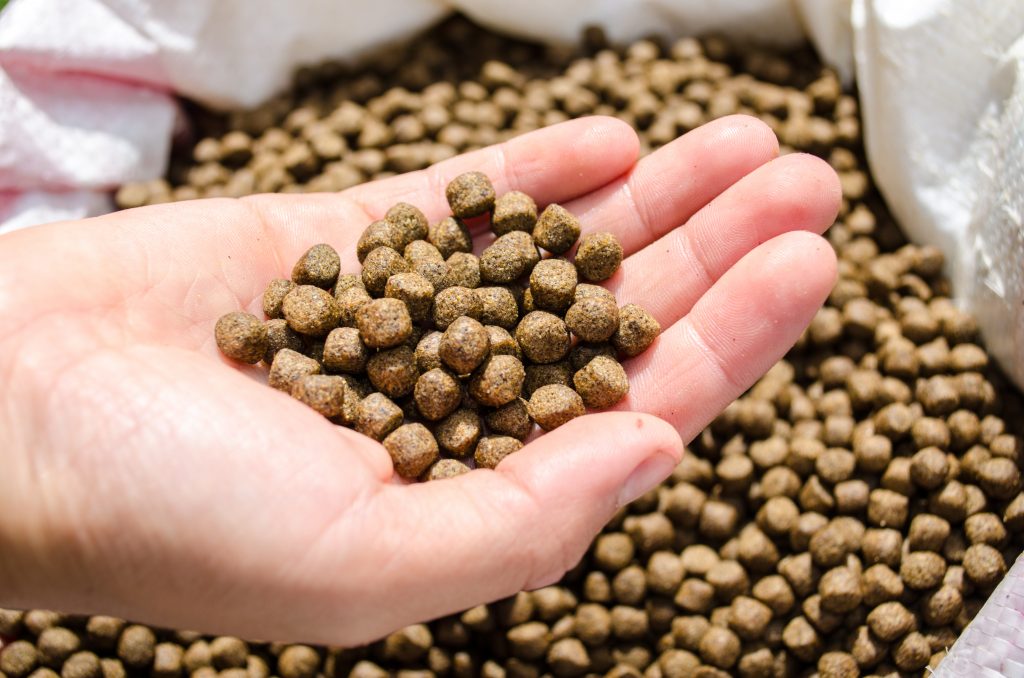
During the process, raw materials are mixed with water and steam, compressed under high pressure, heated, and forced through a die. When the processed material leaves the die, rapid pressure release causes expansion, creating the porous structure needed for floating feed production.
This unique processing mechanism makes wet extrusion especially suitable for high-quality aquafeed manufacturing.
The Basic Principle of Wet Type Fish Feed Extrusion
The working principle of wet extrusion is based on the interaction between mechanical energy and thermal energy.
Inside the extrusion system, several physical changes occur:
1. Moisture Addition
Water and steam are added to the feed mixture before extrusion. Moisture softens the ingredients and improves heat transfer during processing.
2. Heating and Conditioning
The conditioned material reaches a suitable temperature, allowing starch and proteins to undergo structural changes.
3. Compression and Shearing
Inside the extrusion chamber, rotating screws compress and transport the material. Mechanical shear generates additional heat and modifies the ingredient structure.
4. Expansion at the Die Outlet
When the material exits the die, pressure suddenly decreases. The water inside the mixture evaporates rapidly, creating tiny air cells inside the pellets.
These internal air pockets reduce pellet density and allow floating feed to remain on the water surface.
Main Components of a Wet Type Fish Feed Extrusion System
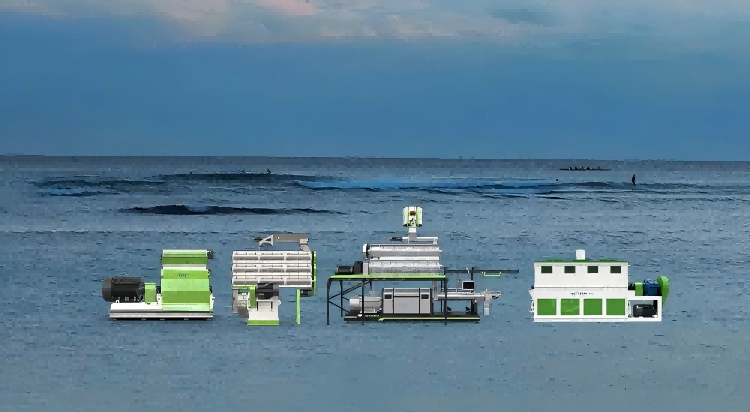
A complete wet extrusion production system consists of several important components working together.
(Related machine: industrial aqua feed plant)
Raw Material Preparation System
Before extrusion, raw materials must be cleaned, ground, and prepared.
Common fish feed ingredients include:
- Fish meal
- Soybean meal
- Wheat flour
- Corn
- Rice bran
- Vegetable protein sources
- Fish oil
- Vitamins and minerals
Proper preparation ensures better mixing and improves extrusion performance.
Grinding System
Grinding reduces raw materials into smaller particles. Particle size affects:
- Mixing uniformity
- Moisture absorption
- Starch gelatinization
- Pellet surface quality
Fine and uniform particles allow the extrusion process to operate more efficiently and produce smoother feed pellets.
Mixing System
After grinding, ingredients are accurately measured and mixed according to the feed formula.
A uniform mixture ensures:
- Consistent nutrient distribution
- Stable extrusion performance
- Similar quality among all pellets
Poor mixing may result in uneven nutritional content and inconsistent pellet characteristics.
Conditioning System
Conditioning is one of the most important steps in wet extrusion.
During conditioning:
- Steam is added
- Water is introduced
- Ingredients are heated
- Moisture is distributed evenly
This stage prepares the material for extrusion by improving its physical properties.
Effective conditioning helps:
- Increase starch gelatinization
- Reduce extrusion resistance
- Improve pellet expansion
- Enhance feed digestibility
A well-designed conditioning system is essential for producing high-quality aquatic feed.
How a Fish Food Extruder Processes Feed Materials
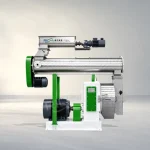
The fish food extruder is the central machine in the wet extrusion process. It converts conditioned feed material into finished pellets through controlled mechanical and thermal processing.
https://richipelletizer.com/floating-fish-feed-extruder-machine
The extrusion process inside the machine includes several stages.
Material Feeding
Conditioned feed material enters the extrusion chamber through the feeding system.
A stable feeding rate is important because uneven feeding may cause:
- Pressure fluctuations
- Unstable pellet quality
- Reduced production efficiency
Modern extrusion systems often use automatic feeding control to maintain consistent operation.
Compression and Mixing
Inside the barrel, rotating screws transport the material forward while compressing and mixing it.
During this stage:
- Pressure increases
- Temperature rises
- Ingredients become more uniform
The mechanical energy generated by screw movement contributes to starch gelatinization and protein modification.
Cooking and Gelatinization
The combination of heat, moisture, and pressure creates a cooking effect inside the extruder.
One of the most important changes is starch gelatinization.
During gelatinization:
- Starch granules absorb water
- Molecular structures change
- Digestibility improves
- Binding ability increases
Gelatinized starch helps create strong pellets and improves nutrient utilization.
Die Forming
After processing inside the extrusion chamber, the material is pushed through a die.
The die determines:
- Pellet diameter
- Shape
- Production capacity
Different fish species require different pellet sizes, so manufacturers can select different dies according to product requirements.
Expansion and Pellet Cutting
When the material exits the die, pressure drops suddenly. The moisture inside the feed evaporates rapidly, causing expansion.
This creates:
- Lower pellet density
- Better floating ability
- Porous internal structure
A cutting system then cuts the expanded material into pellets of the required length.
Factors Affecting Wet Type Fish Feed Extrusion Performance
The quality of wet extruded fish feed depends on several important factors.
Raw Material Formula
The feed formula directly affects extrusion behavior.
Ingredients with suitable starch content usually improve expansion and pellet binding.
Protein, fat, and fiber levels must also be balanced to achieve both nutritional quality and good processing performance.
Moisture Content
Moisture is essential in wet extrusion.
Proper moisture helps:
- Improve material flow
- Support starch gelatinization
- Control pellet expansion
Too little moisture may cause unstable extrusion, while too much moisture may reduce floating performance.
Temperature
Temperature affects starch gelatinization, nutrient availability, and pellet structure.
Appropriate temperatures improve:
- Digestibility
- Pellet strength
- Processing stability
However, excessive heat may damage sensitive nutrients.
Pressure
Pressure determines the expansion effect after the material exits the die.
Proper pressure control helps produce pellets with:
- Uniform density
- Stable floating ability
- Good water resistance
Screw Speed
Screw speed affects:
- Residence time
- Mechanical shear
- Production capacity
Optimizing screw speed allows manufacturers to balance output and pellet quality.
Advantages of Wet Type Fish Feed Extrusion
Wet extrusion provides many benefits for modern aquaculture feed production.
Improved Feed Digestibility
High-temperature processing improves nutrient availability by modifying starch and reducing anti-nutritional factors.
Fish can absorb nutrients more efficiently, resulting in better growth performance.
Better Floating Performance
Wet extrusion creates expanded pellets with controlled density.
This allows manufacturers to produce floating feed that remains visible on the water surface.
Farmers can easily monitor feeding behavior and reduce overfeeding.
Stronger Water Stability
Extruded pellets maintain their structure longer in water.
Benefits include:
- Reduced nutrient leakage
- Less feed waste
- Improved water quality
Higher Formula Flexibility
Wet extrusion can process various raw materials and complex formulas.
Manufacturers can develop customized feed for different species and growth stages.
Improved Production Efficiency
Modern wet extrusion systems provide stable operation and high production capacity.
With automated control systems, manufacturers can maintain consistent product quality while reducing labor requirements.
Wet Extrusion Compared with Traditional Pelletizing
Traditional pelletizing mainly relies on mechanical compression to form pellets. While it can produce basic feed products, it has limitations in producing high-performance aquatic feed.
Wet extrusion offers advantages such as:
| Feature | Wet Extrusion | Traditional Pelletizing |
|---|---|---|
| Expansion ability | Excellent | Limited |
| Floating feed production | Highly suitable | Difficult |
| Starch gelatinization | High | Lower |
| Water stability | Better | Moderate |
| Formula flexibility | Higher | Limited |
Because of these advantages, wet extrusion has become the preferred technology for many commercial aquafeed manufacturers.
Applications of Wet Type Fish Feed Extrusion
Wet extrusion technology is widely used in different aquaculture sectors.
Freshwater Fish Feed
Species such as tilapia, carp, and catfish benefit from floating feed produced through wet extrusion.
Marine Fish Feed
Marine species often require high-protein feed with excellent digestibility and stability.
Shrimp Feed
Wet extrusion can produce feed with suitable hardness and water resistance for shrimp farming.
Specialty Aquatic Feed
Extrusion technology also supports the production of functional feed containing additives, probiotics, and other nutritional components.
How to Improve Wet Extrusion Production Efficiency
Manufacturers can improve extrusion performance through several strategies.
Optimize Feed Formulation
Balanced formulas improve both nutritional value and processing stability.
Maintain Equipment Properly
Regular maintenance of screws, dies, bearings, and cutting systems ensures stable production.
Use Automatic Control Systems
Automation improves accuracy and reduces operating errors.
Monitor Product Quality
Regular testing of pellet density, moisture, durability, and nutrient content helps maintain consistent quality.
Future Development of Wet Type Fish Feed Extrusion Technology
As aquaculture continues to expand, wet extrusion technology will continue to develop toward higher efficiency and sustainability.
Future trends include:
- Intelligent production control
- Energy-saving extrusion equipment
- Greater use of alternative proteins
- Customized feed solutions
- Improved automation
Advanced extrusion technology will help manufacturers produce better feed while reducing resource consumption and environmental impact.
(view our website: RICHI Machinery )
Conclusion
Wet type fish feed extrusion is an advanced processing technology that improves the quality and efficiency of aquatic feed production. By combining moisture, steam, heat, pressure, and mechanical shear, it transforms raw materials into highly digestible, stable, and nutritionally valuable feed pellets.
The fish food extruder is the key equipment that makes this process possible. Through precise control of extrusion conditions, it enables manufacturers to produce floating and sinking feed suitable for different aquatic species while improving feed utilization and production efficiency.
As the global aquaculture industry continues to grow, wet type fish feed extrusion will remain an essential technology for producing high-quality, sustainable, and cost-effective aquatic feed.